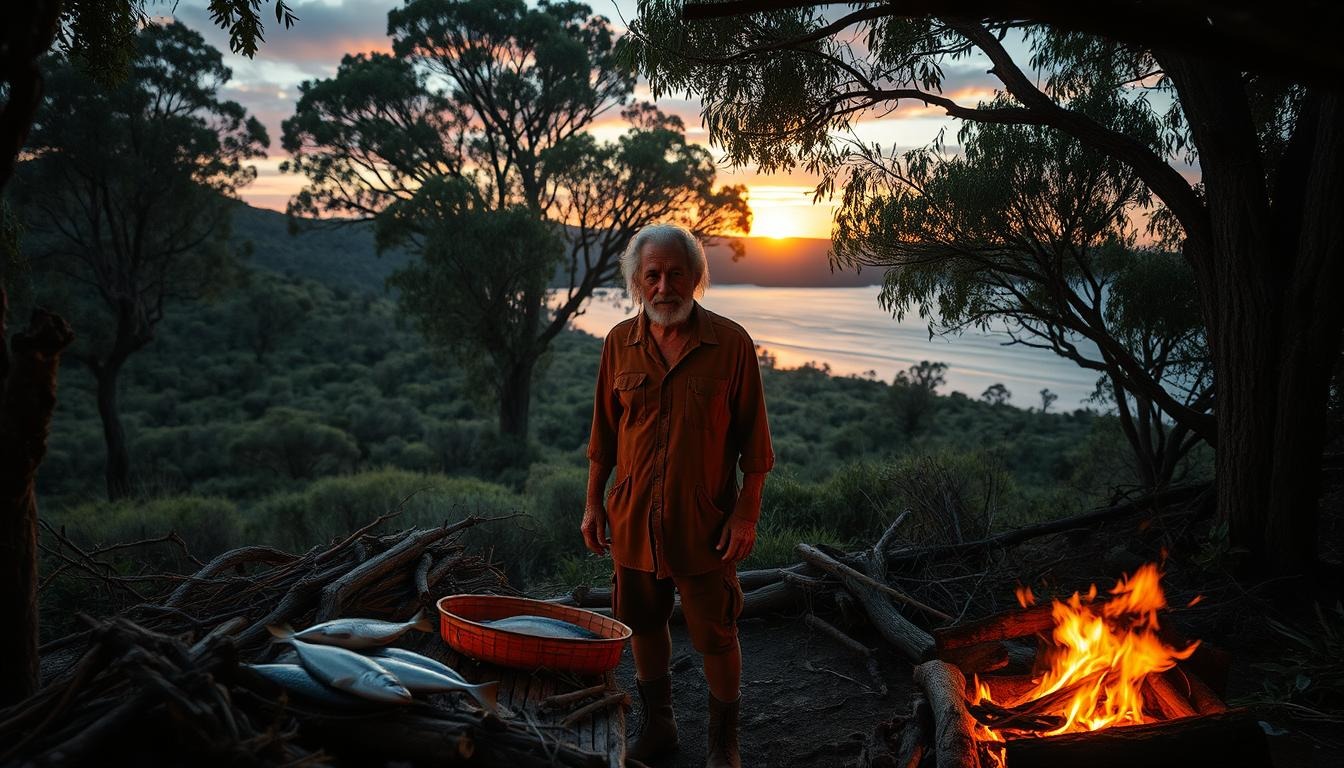
Starting a Solo Survival in the Australian Wilderness adventure in the Australian wilderness is tough. You have to use your brain and know-how to make it. This story is about a wild journey of surviving off the land for three days. It talks about the hard parts and how to catch and prepare meals in the wild.
Catch & Cook, Bushcraft Island Camping, No Food
The Australian wilderness is tough and unique. Here, primitive skills are key to staying alive. This adventure shows how important being adaptable and resourceful is when things get tough.surviving off the land for three days
Key Takeaways
- Essential skills for solo survival in the wilderness
- Techniques for catching and preparing wild game
- Importance of adaptability in survival situations
- Overview of bushcraft and its role in wilderness survival
- Strategies for island camping with minimal equipment
- surviving off the land for three days
Preparing for the Australian Wilderness Challenge
Starting a solo survival adventure in the Australian wilderness needs careful planning. You must understand the challenges you’ll face. This preparation is crucial for a successful outdoor survival journey.
Essential Gear for Wilderness Survival
Having the right gear is key for survival. The debate is whether to carry minimal tools or focus on survival skills.
Minimal Tools vs. Skills Approach
A minimal tools approach means carrying only the essentials. You rely on your skills to overcome challenges. On the other hand, a skills-focused approach teaches you to survive with minimal equipment.surviving off the land for three days
Weather-Appropriate Clothing Choices
Choosing the right clothes is vital for the unpredictable Australian weather. Wearing layers of breathable clothes helps keep your body temperature stable.surviving off the land for three days
Scouting the Perfect Island Location
Finding the right island is crucial for a successful survival experience. You need to consider accessibility and how isolated it is.
Accessibility and Isolation Factors
The perfect location should be easy to reach but also isolated. This balance provides a true survival challenge.
Resource Assessment Before Commitment
Before choosing a location, check the resources available. Look for water, food, and materials for shelter.surviving off the land for three days
Australian Wilderness Survival
By preparing well and choosing the right location, you can have a rewarding wilderness cooking and catch & cook experience.
Day 1: Establishing Base Camp on the Island
As I stepped onto the island, my first goal was to set up a safe camp. The Australian wilderness is tough, and a good campsite is key to survival.surviving off the land for three days
Finding the Ideal Campsite
Finding the right campsite takes thought. It should be protected by nature and near water.
Natural Protection from Elements
The campsite needs to shield against wind and rain. Look for a spot with natural cover or trees for shelter.
Proximity to Water Sources
Being near water is good, but watch out for flood areas. Make sure the water is safe and lasting.
Building a Shelter from Natural Materials
Next, I built a shelter using island materials. It protects me from the weather and animals.surviving off the land for three days
Australian Bush Materials for Construction
Branches, leaves, and bark are great for building. Bamboo and saplings make strong frames.
| Material | Usage |
| Branches | Frame and support |
| Leaves | Roofing and insulation |
| Bark | Waterproofing |
Design Considerations for Wildlife Protection
The shelter must keep animals out. Elevate your bed and use thorny branches to deter predators.surviving off the land for three days
Creating Fire Without Modern Tools
Fire is vital for cooking, warmth, and signaling. Making fire without tools takes skill and patience.
Hand Drill and Friction Methods
The hand drill method creates heat by rubbing sticks together. This method works well but needs practice.
Maintaining Fire in Humid Conditions
Keeping a fire going in damp weather is hard. Use dry materials and keep the fire dry to avoid rain damage.
bushcraft island camping
Setting up a base camp is just the start. With a safe shelter and fire, finding food and navigating the wilderness come next.
Catch & Cook, Bushcraft Island Camping, No Food: The Basic Principles
When you go bushcraft island camping, learning to live off the land is key. It boosts your survival skills and connects you more with nature.
Understanding the Catch & Cook Philosophy
The catch & cook philosophy focuses on sustainable harvesting. It’s about using what’s around you and respecting the environment.
Sustainable Harvesting Practices
Sustainable harvesting means only taking what you need. This way, you don’t harm the environment. It’s about fishing and foraging wisely.surviving off the land for three days
Adapting to Available Resources
Being flexible is crucial for catch & cook success. You need to adjust your plans based on the season and what’s available.
Bushcraft Techniques for Food Procurement
Bushcraft skills are vital for finding food in the wild. You’ll learn to make tools and use traps.
Tool Creation from Natural Materials
Making tools from wood, bone, and stone is rewarding. You can craft spears, knives, and hooks.
Primitive Trapping Methods
Primitive trapping uses natural materials to catch small game. Knowing how animals behave helps set up effective traps.
| Bushcraft Technique | Application | Skill Level |
| Tool Creation | Hunting, Fishing | Advanced |
| Primitive Trapping | Small Game | Intermediate |
| Sustainable Foraging | Plant-based Nutrition | Beginner |
Wilderness Fishing Techniques in Australian Waters
Exploring the Australian wilderness means learning to fish. It’s key to catch fish for food. We’ll cover the essential techniques and tools for successful fishing.surviving off the land for three days
Handmade Fishing Tools
Making your own fishing tools is crucial for survival. You can create hooks, lines, and nets from natural materials around you.
Crafting Hooks from Natural Materials
You can make hooks from bone, wood, or rocks. The goal is to make them strong enough to hold bait or lures.
Line and Net Construction
You can make fishing lines from plant fibers or animal sinew. Nets can be made from woven fibers or even old clothes. They’re great for catching fish.Solo Survival in the Australian
Best Spots to Find Fish Around Australian Islands
Finding the right fishing spots is as important as the techniques. Some areas around Australian islands are full of fish.
Tidal Pool Opportunities
Tidal pools are perfect for fishing during low tide. They’re full of fish and other seafood.
Shallow Water Hunting
Shallow waters near the shore are rich in fish. Using spears or handmade nets can help you catch a lot.
Cleaning and Preparing Your Catch
After catching a fish, cleaning and preparing it is key. This ensures a tasty meal.
Filleting with Primitive Tools
Filleting a fish with basic tools takes patience and skill. Sharp stones or shells can help you make clean cuts.
Maximizing Every Part of the Fish
To fully enjoy the catch & cook experience, use as much of the fish as you can. This includes the bones and organs for a nutritious broth.
Learning these fishing techniques improves your survival chances. It also deepens your appreciation for outdoor survival skills. Every skill, from tool-making to finding fishing spots, is important.
Foraging for Edible Plants in the Australian Bush
Knowing which plants are safe to eat is key for survival in Australia. Foraging for edible plants can help you stay fed and enjoy your time in the bush.Solo Survival in the Australian
Identifying Safe Native Plants and Fruits
Finding the right plants is crucial. Some plants can be harmful, so it’s important to know which ones are safe.
Common Edible Species in Coastal Areas
Coastal areas in Australia are full of edible plants like pigface and warrigal greens. These plants are not only safe to eat but also give you important nutrients.Solo Survival in the Australian
Avoiding Toxic Lookalikes
Some plants that look similar can be toxic. For example, the Bolboschoenus fluviatilis can be mistaken for harmful plants. It’s important to know how to tell them apart to avoid poisoning.
Nutritional Benefits of Wild Edibles
Wild edibles are packed with nutrients. They can have lots of vitamins, minerals, and antioxidants.
Energy-Rich Plant Foods
Plants like kakadu plum are full of vitamin C and give you a boost of energy.
Medicinal Properties of Australian Plants
Some Australian plants have healing properties. For example, tea tree is known for its antiseptic qualities.
| Edible Plant | Nutritional Benefit | Medicinal Use |
| Kakadu Plum | High in Vitamin C | Antioxidant properties |
| Warrigal Greens | Rich in Vitamins A and C | Used in traditional cooking |
| Tea Tree | Antiseptic properties | Used for skin treatments |
Foraging for edible plants is a valuable skill for wilderness adventures in Australia. It lets you add to your diet and stay healthy while eating in the wild. By learning about local plants and enjoying foraged meals, you can make your survival journey better.
Day 2: Advanced Survival Techniques
On Day 2, I learned advanced survival skills. These included how to purify water and track wildlife. It became clear that these skills are key for surviving long-term in the Australian wilderness.
Water Procurement and Purification
Having clean drinking water is essential in survival situations. Day 2 focused on finding and purifying water.Solo Survival in the Australian
Solar Still Construction
Building a solar still is a great way to purify water. Using a container, plastic sheet, and rock, I harnessed the sun’s power. This method leaves contaminants behind. “A solar still can be a lifesaver in arid environments,” as it purifies water without equipment.
Natural Filtration Methods
Natural methods can also improve water quality. Boiling, sand filtration, and charcoal filtration remove pathogens and particles. For example, boiling water kills bacteria and viruses effectively.Solo Survival in the Australian
Tracking Wildlife for Potential Food Sources
Tracking wildlife is vital for finding food in the wilderness. Knowing animal behavior and recognizing signs helps in hunting and foraging.
Reading Animal Signs in Australian Terrain
In Australia, reading animal signs is crucial. Identifying tracks, scat, and feeding grounds shows where to hunt.
Ethical Hunting Considerations
Hunting is a survival method, but it must be done ethically. It’s important to respect the animal, minimize waste, and follow local laws.Solo Survival in the Australian
“Hunting should be done with reverence for the animal and the environment.”
Improving Your Shelter for Longer Stay
As time goes on, your shelter may need updates for comfort. Improvements include making it weatherproof and more comfortable.Solo Survival in the Australian
Weatherproofing Techniques
Weatherproofing makes your shelter strong against different weather. Adding foliage, reinforcing the frame, and ensuring drainage are key. A well-weatherproofed shelter boosts survival chances.
Comfort Improvements with Natural Materials
Using natural materials can make your shelter more comfortable. For example, leaves or grasses can make a better bed for sleeping.
Wilderness Cooking Methods Over an Open Flame
Surviving in the Australian wilderness for three days is more than just finding shelter and water. You also need to know how to cook meals. Cooking over an open flame is a key skill that makes survival better.Solo Survival in the Australian
Using primitive cooking methods is vital for dining off the grid. These techniques not only feed you but also enrich your wilderness adventure.Solo Survival in the Australian
Primitive Cooking Tools and Techniques
Primitive cooking uses tools made from nature’s materials. These tools are found in the wilderness.
Stone and Wood Cooking Implements are some of the most basic yet effective tools. Stones can be used to make hearths or cooking surfaces. Wooden skewers are great for grilling.
Stone and Wood Cooking Implements
Stones and wood can be used creatively for cooking. A flat stone can be a griddle. A wooden skewer is perfect for roasting fish or meat.
Earth Oven Construction
An earth oven is a great way to cook in the wilderness. You dig a pit, put food inside, cover it with hot coals and earth. This cooks the meal slowly.Solo Survival in the Australian
Fish and Game Preparation Techniques
Preparing fish and game in the wilderness requires several methods. These include smoking for preservation and using wild herbs for flavor.Solo Survival in the Australian
Smoking for Preservation
Smoking helps preserve fish and game. It dehydrates and adds flavor by exposing them to smoke.
Flavor Enhancement with Wild Herbs
Wild herbs can make your meals taste better. Herbs like lemon myrtle and native bush tomatoes are not only tasty but also healthy.Solo Survival in the Australian
Preserving Food in the Wild
Preserving food is key for long stays in the wilderness. Methods include drying and proper storage.
Drying Techniques for Fish and Fruits
Drying is a good way to keep fish and fruits fresh. It involves sun-drying or drying near a fire.
Storage Solutions for Extended Stays
For long stays, it’s important to store dried foods well. Use airtight containers made from bark or woven fibers.Solo Survival in the Australian
| Cooking Method | Description | Benefits |
| Grilling | Cooking directly over flames | Quick, adds smoky flavor |
| Steaming | Cooking with steam from boiling water | Retains nutrients, gentle on food |
| Earth Oven | Cooking in a pit covered with earth and coals | Slow cooking, energy-efficient |
Day 3: Mastering the Wilderness
After two days of learning, I was ready to really master the wilderness on Day 3. I had moved from just surviving to truly thriving in nature. This was the essence of bushcraft island camping.
Advanced Bushcraft Skills Developed
By Day 3, my outdoor survival skills were top-notch. I knew how to use the island’s resources to my best advantage.Solo Survival in the Australian
Tool Refinement and Maintenance
I worked on making my tools better, keeping them ready for any task. This meant sharpening and taking care of the materials.
Efficient Resource Management
Managing resources well was key. I improved my foraging and fishing to use less and get more nutrition. This showed the true meaning of eating in the wild.
Mental Challenges and How to Overcome Them
The mental side of solo survival was tough, just like the physical. I had to deal with feelings of loneliness and doubt.
Combating Isolation and Uncertainty
To beat these mental challenges, I stuck to a routine. I kept busy with tasks and celebrated my progress. This mental strength was crucial for survival.Solo Survival in the Australian
Building Confidence Through Success
Every small win boosted my confidence. Catching a fish or making a useful tool proved I could survive and even thrive.
Safety Considerations for Solo Wilderness Survival
Surviving alone in the Australian wilderness requires careful planning. Knowing potential hazards is key. When you’re catch & cook in the wilderness with no food, safety protocols are crucial.
Recognizing and Avoiding Dangerous Australian Wildlife
Australia has unique and sometimes deadly wildlife. It’s vital to know how to identify and avoid these dangers.
Snake and Spider Awareness
Australia has some of the most venomous snakes and spiders. Wear protective clothing and stay on marked trails. Avoid reaching into dark or hidden areas.Solo Survival in the Australian
Marine Hazards in Coastal Areas
Be aware of marine hazards like box jellyfish and saltwater crocodiles near coastal areas. Avoid swimming in areas with known hazards. Be cautious when exploring tidal areas.Solo Survival in the Australian
Emergency Protocols When Alone
Despite best efforts, emergencies can happen. Knowing how to respond is critical when alone in the wilderness.
Signaling for Help
Use signaling techniques like creating smoke during the day. Use mirrors to reflect sunlight. Build a signal fire at night to alert rescuers.
First Aid with Limited Resources
Basic first aid knowledge is crucial. Learn to treat common injuries like cuts, burns, and snake bites with limited resources.
Understanding these safety considerations and being prepared can greatly reduce risks. This is important for solo wilderness survival in Australia.Solo Survival in the Australian
Conclusion: Lessons from Three Days in the Australian Wilderness
Surviving 3 days alone in the Australian wilderness was a life-changing experience. It taught me valuable skills in bushcraft, foraging, and off-grid dining. I learned the importance of being prepared, adaptable, and resilient.
The trip showed me how foraged meals connect us to nature. Catching fish and finding edible plants deepened my respect for the natural world.
Off-grid dining was a highlight. It allowed me to enjoy meals without modern distractions. This experience showed me the joy of simple, wholesome food.Solo Survival in the Australian
As the adventure ended, I realized the lessons I learned would stay with me. They will influence my future and keep me connected to nature.Solo Survival in the Australian
FAQ
What are the essential skills required for 3-day solo survival in the Australian wilderness?
You need to know bushcraft, how to fish in the wild, and forage for plants. Also, building shelters and starting fires without modern tools is crucial.Solo Survival in the Australian
How do I prepare for the Australian wilderness challenge?
First, gather all the necessary gear. Then, find the best island to stay on. Choose clothes that fit the weather and know what resources you have before you start.Solo Survival in the Australian
What are some sustainable harvesting practices for catch & cook?
To harvest sustainably, adapt to what’s available and avoid overfishing. Always respect the local ecosystem to keep a balance between using resources and preserving them.Solo Survival in the Australian
How can I identify safe native plants and fruits in the Australian bush?
Learn about common edible plants in coastal areas. Know how to tell safe plants from toxic ones. Also, understand the health benefits of eating wild plants.Solo Survival in the Australian
What are some primitive cooking tools and techniques used in wilderness cooking?
Use stone and wood for cooking. Build earth ovens, smoke food to preserve it, and add flavor with wild herbs.Solo Survival in the Australian
How do I purify water in the wilderness?
You can build a solar still or use natural methods to filter water. This makes it safe to drink.Solo Survival in the Australian
What are some emergency protocols when alone in the wilderness?
Know how to signal for help and do basic first aid. These skills are vital for handling medical emergencies when you’re alone.
How can I avoid dangerous Australian wildlife?
Be aware of snakes and spiders, and watch out for marine dangers near the coast. Take steps to avoid encounters with wildlife.Solo Survival in the Australian
What are some tips for maintaining mental health during solo wilderness survival?
Fight off feelings of isolation and uncertainty. Build confidence by succeeding in survival tasks. Stay focused on survival to keep a positive outlook.Solo Survival in the Australian
How do I maximize every part of the fish when cooking in the wilderness?
Use primitive tools to fillet the fish. Cook the whole fish and preserve leftovers by drying or smoking. This reduces waste.
What are some bushcraft techniques for food procurement?
Make tools from natural materials and use primitive traps. Adapt to what’s available to find food and sustain yourself.Solo Survival in the Australian