When you go into the wilderness in winter, being ready for extreme weather is key. To survive a snowstorm solo, you need a strong shelter to keep you safe from the cold.Shelter While Solo Camping
It’s important to know how to make and keep a dugout shelter strong against heavy snow. In this article, we’ll show you how to make a safe place under 12 ft (4 m) of snow.
Dugout shelter under 12 fit ( 4 meter ) of snow solo camping
By using our tips and methods, you can stay safe and warm in bad weather. The secret to surviving in the snow is being ready and having the right shelter.
Key Takeaways
- Understand the importance of a well-built shelter for survival camping in the snow.
- Learn how to build a dugout shelter that can withstand heavy snowfall.
- Discover techniques for maintaining your shelter during extreme weather conditions.
- Stay safe and comfortable while solo camping in snowy environments.
- Be prepared for the challenges of survival camping in winter.
- Shelter While Solo Camping
Understanding Dugout Snow Shelters
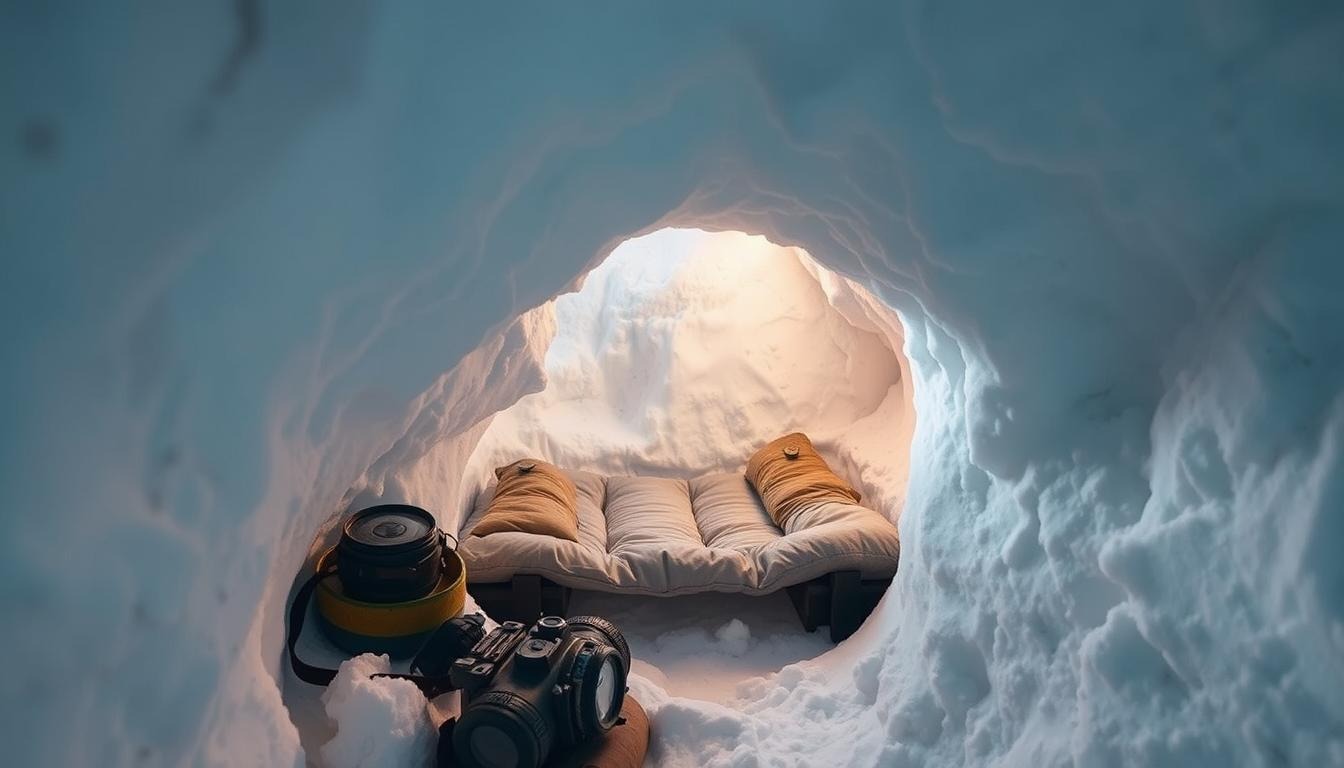
Exploring snowy areas can be safer with dugout snow shelters. These shelters are dug into the snow. They create a safe and warm space.Shelter While Solo Camping
What is a dugout snow shelter?
A dugout snow shelter is a hole dug into a snowbank. It has a roof of snow blocks or other materials. It protects you from cold and wind.Shelter While Solo Camping
Benefits of dugout shelters in extreme conditions
Dugout shelters have big advantages in harsh weather. They keep you warm and block strong winds.Shelter While Solo Camping
Insulation properties
The snow around a dugout shelter keeps it warm. This is key to staying alive.Shelter While Solo Camping
Protection from wind
These shelters also stop harsh winds. This helps prevent hypothermia and makes camping better.
When to use a dugout shelter vs. other snow shelters
Choosing between a dugout shelter and others depends on several things. These include snow depth, wind, and how long you’ll stay. Here’s when to pick a dugout shelter:Shelter While Solo Camping
| Condition | Dugout Shelter | Other Snow Shelters |
| Snow Depth | Deep snow (>4 meters) | Shallow snow ( |
| Wind Conditions | High winds | Moderate winds |
| Duration of Stay | Extended stays | Short-term stays |
underground shelter for snow camping
Knowing these factors helps decide if a dugout snow shelter is right for you.
Essential Planning Before Your Winter Expedition
Getting ready for your winter adventure means planning is key. You need to take several important steps. These steps will keep you safe and help your trip go well.Shelter While Solo Camping
Weather Monitoring and Forecasting
Checking the weather is very important before and during your trip. Use reliable weather sources like the National Weather Service or weather apps. They give you accurate forecasts.
Reliable Weather Sources
Official weather forecasting services like the National Weather Service are the best. They give you the latest and most accurate weather info.Shelter While Solo Camping
Understanding Snow Accumulation Predictions
It’s important to know how much snow you’ll face. Snow accumulation predictions help you plan your route and where to set up camp.Shelter While Solo Camping
Location Selection Criteria
Picking the right spot for your winter camping is crucial. Look at avalanche risk, how close you are to resources, and if there are natural windbreaks.Shelter While Solo Camping
Informing Others of Your Plans
Telling others about your trip is a must. Make a detailed plan and set up emergency contact protocols.
Creating a Detailed Itinerary
Give a detailed plan to someone you trust. Include your route, when you expect to return, and how to reach you.
Emergency Contact Protocols
Have a plan for emergencies. List your emergency contacts and how to stay in touch.Shelter While Solo Camping
| Planning Aspect | Description | Importance Level |
| Weather Monitoring | Tracking weather forecasts and snow accumulation | High |
| Location Selection | Choosing a safe location based on avalanche risk and other factors | High |
| Informing Others | Leaving a detailed itinerary and emergency contact information | High |
winter camping planning
“Preparation is key to a successful winter camping trip. By carefully planning your expedition, you can ensure a safe and enjoyable experience.”Shelter While Solo Camping
Gear and Equipment Checklist for Snow Camping
To tackle snow camping, you need a detailed gear list. The right gear ensures your safety and comfort in cold weather.
Shelter-building Tools
Building a shelter in the snow is crucial. You’ll need:
Shovels and Snow Saws
A strong shovel is key for digging into snow. A snow saw is also important for cutting blocks for your shelter.
Compact Tools for Solo Travelers
For solo adventurers, small and light tools are best. Look for multi-tool devices that can do many jobs.Shelter While Solo Camping
Insulation Materials
Keeping warm in your shelter is vital. Use snow, foam pads, or insulated blankets for insulation.
Emergency Equipment
Emergency gear is lifesaving in unexpected situations. You’ll need first aid kits, emergency blankets, and repair kits.
Communication Devices
Staying connected is crucial in emergencies. You’ll need:
Satellite Phones and Emergency Beacons
Satellite phones let you call from far-off places. Emergency beacons (EPIRBs) send distress signals to rescue teams.Shelter While Solo Camping
Battery Preservation Techniques
To keep devices charged, use power-saving tips. Turn off what you don’t need, use power-saving modes, and keep batteries warm.Shelter While Solo Camping
Here’s a quick look at the must-have gear for snow camping:
| Category | Item | Description |
| Shelter-building Tools | Shovel | For digging into snow |
| Insulation Materials | Foam Pads | For keeping warm |
| Communication Devices | Satellite Phone | For emergency calls |
Selecting the Ideal Location for Your Dugout Shelter
When you go solo camping in snowy areas, picking the right spot for your shelter is key. This choice affects your safety and comfort while you’re there.Shelter While Solo Camping
Avalanche Risk Assessment
It’s important to check if there’s a risk of avalanches. Look at the terrain to stay away from dangerous slopes.
Terrain Evaluation
Choose slopes that aren’t too steep and avoid places where avalanches have happened recently. Terrain evaluation helps lower the risk.
Snow Pack Testing
Do snow pack tests to see how stable the snow is. Dig a snow pit and use tests like the compression test or the shovel shear test.
Snow Depth Verification
Make sure the snow is deep enough for a strong shelter. You’ll need at least 4 meters (12 feet) of snow.Shelter While Solo Camping
Natural Windbreaks and Protection
Use natural windbreaks to protect your shelter. Look for spots near cliffs or dense forests.
Using Terrain Features Effectively
Terrain features can also help protect your shelter. For example, a depression or a group of trees can block harsh winds.
By carefully checking these factors, you can find a safe spot for your shelter. This will help you survive better while snow camping.Shelter While Solo Camping
Step-by-Step Guide to Building a Dugout Shelter Under 12 Ft (4 Meter) of Snow
Building a dugout shelter under deep snow requires several key steps. These steps are essential for a safe and comfortable shelter. As you venture into the snowy terrain, it’s crucial to understand the techniques and strategies involved in constructing such a shelter.
Initial Snow Assessment and Marking
Before you start digging, assessing the snow conditions is vital. You need to check the depth, density, and stability of the snow. Use a probe or a long stick to measure the snow depth and identify any potential weak layers. Once you’ve determined that the area is suitable, mark out the perimeter of your shelter using ski poles or sticks.
Digging Techniques for Efficiency
Efficient digging is crucial to conserve energy. Start by removing snow in blocks, using a snow saw or a shovel. The blocks can be used later to reinforce the structure or block the entrance.
Energy Conservation Methods
To conserve energy, dig in a way that minimizes the amount of snow you need to move. Start with a small entrance tunnel and gradually enlarge it as needed.
Tool Rotation Strategies
If you’re using multiple tools, rotate them regularly to avoid fatigue. For instance, switch between a shovel and a snow saw every 10-15 minutes to keep your work pace consistent.Shelter While Solo Camping
Creating the Entrance Tunnel
The entrance tunnel is a critical component of your dugout shelter, providing protection from wind and snow. Ensure it’s angled correctly to prevent snow from entering.Shelter While Solo Camping
Proper Angle and Dimensions
The entrance tunnel should be at an angle of about 30-40 degrees to the surface. The dimensions should be just large enough for you to crawl through comfortably.
Cold Air Trap Design
Designing a cold air trap at the entrance can help prevent cold air from entering the main chamber. This can be achieved by creating a small vestibule before the main entrance.Shelter While Solo Camping
Carving the Main Chamber
The main chamber is where you’ll spend most of your time, so it needs to be spacious and comfortable.
Optimal Dimensions for Solo Campers
For solo campers, a chamber that’s about 6-8 feet in diameter is sufficient. Ensure the height is enough to sit comfortably without hitting your head.Shelter While Solo Camping
Dome-Shaped Ceiling Benefits
A dome-shaped ceiling provides maximum structural integrity. It distributes the weight of the snow evenly, reducing the risk of collapse.Shelter While Solo Camping
| Aspect | Recommendation | Benefits |
| Entrance Tunnel Angle | 30-40 degrees | Prevents snow entry, easy access |
| Main Chamber Diameter | 6-8 feet | Comfortable for solo campers |
| Ceiling Shape | Dome-shaped | Maximum structural integrity |
“The art of building a snow shelter is not just about survival; it’s about creating a home in the harshest of environments.”
– Experienced Winter Camper
By following these steps and tips, you can build a safe and comfortable dugout shelter under 12 feet of snow. Remember, the key to a successful snow shelter is careful planning, efficient digging, and attention to detail.Shelter While Solo Camping
Structural Reinforcement and Ventilation
Structural reinforcement and ventilation are key to a safe and comfy dugout shelter. It’s important to make sure your shelter can handle snow and keep the air healthy. This is crucial for staying safe.Shelter While Solo Camping
Supporting the Ceiling
Building a strong dugout shelter starts with a solid ceiling. You can do this with snow compaction techniques and snow’s natural properties.Shelter While Solo Camping
Snow Compaction Techniques
Compacting snow makes your shelter stronger. Use tools like shovels or your feet to press the snow. This makes it denser and more solid.Shelter While Solo Camping
Using Natural Snow Properties
Natural snow properties can also help support your ceiling. Some snow types are more cohesive. They can form a stronger structure when shaped right.
Creating Air Vents
Good ventilation keeps the air inside fresh. Making air vents is easy but needs some planning.
Proper Placement for Airflow
Where you put air vents is very important. They should help air flow and keep snow out.
Maintenance During Snowfall
Keep your air vents clear during snowfall. Regular checks and clearing snow from vents are key to keeping air flowing.
Testing Structural Integrity
Before you move in, check if your shelter is strong. Look for any signs of weakness or potential collapse.
Here’s a simple table to help you check your shelter’s strength:
| Assessment Criteria | Condition | Action Required |
| Ceiling Condition | Stable/Cracked | Reinforce if Cracked |
| Wall Integrity | Solid/Weak | Compact or Reinforce if Weak |
| Ventilation | Adequate/Inadequate | Adjust Vents if Inadequate |
By following these tips, you can make sure your dugout shelter is strong and well-ventilated. This will give you a safe place during harsh snow.
Interior Design and Organization for Comfort and Survival
The design and organization of your dugout shelter’s interior are key to surviving harsh winters. A well-organized space not only makes you more comfortable but also crucial for survival.Shelter While Solo Camping
Creating Sleeping Platforms
Creating a sleeping platform elevated from the ground is vital. This keeps you warmer since cold air settles at the bottom.
Elevated Designs for Warmth
To make an elevated bed, use snow blocks or insulating materials. This design keeps you warmer by blocking cold from the ground.Shelter While Solo Camping
Storage Solutions
Good storage is essential in a dugout shelter. It keeps your gear organized and your space clear. Use the walls for storage to free up floor space.
Organizing for Efficiency
Efficient organization is crucial for a safe and comfortable stay. Make sure essential items are easy to find and the space is used well.
Essential Item Accessibility
Store often-used items where they’re easy to get to. Keep emergency supplies like first aid kits and communication devices near the entrance.
Space Maximization Techniques
To save space, use multi-functional gear. For example, a sleeping bag that also serves as a blanket or a multi-tool can help reduce clutter.Shelter While Solo Camping
By focusing on these interior design and organization tips, you can turn your dugout shelter into a cozy, functional, and safe place for your snow camping adventure.Shelter While Solo Camping
Temperature Management in Your Dugout Shelter
Keeping a safe and comfy temperature in your snow shelter is essential. It’s important for both comfort and survival in cold weather.Shelter While Solo Camping
Insulation Techniques
Good insulation keeps your shelter’s temperature stable. Snow’s air-filled structure makes it a great insulator.
Using Snow’s Natural Properties
Snow keeps cold out because of its air pockets. This makes your shelter warm and cozy. The snow around your shelter blocks cold air.Shelter While Solo Camping
Additional Insulation Materials
Other materials can also help keep you warm. Use foam, dry leaves, or even clothes to line your shelter. These materials help keep the heat in.Shelter While Solo Camping
Safe Heating Methods
It’s important to heat your shelter safely. This prevents accidents and keeps you warm.
Candle Heaters
Candle heaters are a good way to warm up. They give off steady, low heat. Just make sure there’s good air flow to avoid carbon monoxide.
Body Heat Conservation
Keeping your body heat in is also key. Wear warm clothes and stay dry. If you’re with others, huddling together helps keep everyone warm.
Managing Condensation
It’s important to manage condensation. This prevents ice and keeps your shelter dry.
Preventing Ice Formation
Good ventilation stops ice from forming. Open vents or make small holes to let moist air out. This reduces condensation and keeps your shelter dry and warm.Shelter While Solo Camping
Dugout Shelter Under 12 Fit (4 Meter) of Snow Solo Camping Survival Techniques
Surviving in a dugout shelter under 12 feet of snow requires key survival skills. When camping alone, the right strategies can be a lifesaver.
Water Collection and Purification
Having clean water is essential for survival. In a dugout shelter, learning to collect and purify snow is crucial.
Snow Melting Efficiency
To melt snow well, use a container that can handle high heat and has a big surface area. Save fuel by melting snow in small amounts.
- Use a stove or a fire pit with a lid to keep heat in.
- Collect snow from clean areas.
Fuel Conservation
It’s important to save fuel for long survival. Use the best equipment and methods for melting snow.
- Use a snow saw or probe to get snow from a distance.
- Keep fuel dry and safe.
Food Storage and Preparation
Storing and preparing food right is key for staying healthy and energized.
Calorie-Dense Food Options
Choose foods high in calories and nutrients. Nuts, dried fruits, and jerky are great choices.
- Keep food in airtight containers to stay dry.
- Make meals that are easy to cook and use little fuel.
Energy Conservation Strategies
It’s as important to save energy as it is to have the right food and water.
Activity Planning
Plan your activities to avoid too much effort. Focus on important tasks first.
- Stay inside when the weather is bad.
- Use tools like a snow shovel to make tasks easier.
Rest Optimization
Getting enough rest is vital for your health.
- Make your sleeping area cozy and well-insulated.
- Stick to a regular sleep schedule.
Learning these survival techniques can greatly improve your safety and health while camping alone in a dugout shelter under heavy snow.
Emergency Protocols During Severe Weather
In severe weather, your emergency plans can save lives. Being ready is crucial to survive extreme weather.
Shelter Reinforcement During Storms
Strengthening your shelter during a storm is vital. Use snow blocks or other materials to make it stronger.
Managing Shelter Collapse Risks
Knowing the risks of shelter collapse is key. Look out for signs like cracks in walls or ceilings.
Warning Signs to Watch For
- Cracks in the shelter walls or ceiling
- Unusual sounds like creaking or cracking
- Sudden changes in temperature or humidity inside the shelter
Quick Response Actions
- Evacuate the shelter immediately if you notice any warning signs
- Use emergency equipment like shovels to reinforce the shelter
- Stay alert and monitor the shelter’s condition continuously
| Warning Sign | Action Required |
| Cracks in walls or ceiling | Evacuate and reinforce |
| Unusual sounds | Monitor closely |
| Temperature or humidity changes | Check ventilation |
First Aid in Extreme Cold Conditions
First aid in extreme cold is critical. Learn how to treat frostbite and hypothermia.
Frostbite and Hypothermia Treatment
Frostbite treatment involves rewarming slowly. Hypothermia needs immediate medical help and rewarming.
Key steps for frostbite treatment:
- Move to a warm place
- Remove wet clothing
- Rewarm the affected area with warm water
Emergency Exit Strategies
Having a clear emergency exit plan is vital. Know your area and have a strategy.
Mental Well-being During Extended Snow Shelter Stays
Staying in snow shelters for a long time is not just about physical survival. Your mental health is just as important. The isolation and being confined can affect your mind, so it’s key to keep your mental strength up.
Combating Isolation
Being alone in a snow shelter can be tough. It’s important to prepare your mind before you’re in this situation.
Maintaining a Routine
Having a daily routine can make you feel more normal and comfortable.
Activities for Mental Stimulation
Doing things that challenge your mind is crucial for your mental health.
Use this time to learn something new, like a language or a craft. You can also plan your next adventure or think about your past experiences. This keeps you positive and motivated.
By using these strategies, you can greatly improve your mental health in snow shelters. Remember, your mental strength is just as important as your physical readiness.
Conclusion: Mastering the Art of Dugout Shelter Survival
Learning to survive in a dugout shelter is key for solo campers facing harsh winter weather. Knowing how to build and keep a shelter under 12 ft (4 m) of snow is vital. It ensures your safety and comfort during a snow storm.
To survive well in a dugout shelter, you need a good plan, the right tools, and to understand snow shelter dynamics. Before your next solo camping trip, check the snow, pick the best spot, and dig carefully. This will help you build a strong shelter.
By using the tips from this article, you’ll be ready to face a snow storm in a dugout shelter. Stay safe and enjoy your solo camping adventure under the snow.
FAQ
What is the ideal snow depth for building a dugout shelter?
You need at least 4 meters (12 feet) of snow. This depth insulates well and protects from the elements.
How do I assess avalanche risks when selecting a location for my dugout shelter?
Check the terrain and test the snow pack. Look for signs of avalanches or unstable snow. Also, check local forecasts and warnings.
What are the essential tools for building a dugout shelter?
You’ll need shovels, snow saws, and compact tools for solo travel. These help with digging, shaping, and reinforcing the shelter.
How can I maintain a safe temperature inside my dugout shelter?
Use snow’s natural insulation and add extra materials. Safe heating like candle heaters helps. Also, keep your body heat in.
What are the best practices for managing condensation inside the shelter?
Ensure good ventilation with air vents. Keep them open during snowfall. This prevents ice and keeps the shelter dry.
How can I purify snow for drinking water?
Melt the snow and boil it or use purification tablets. Let the melted snow sit to settle any sediment before drinking.
What should I do in case of a shelter collapse?
Stay calm and check for injuries. If you can, dig your way out. If not, signal for help and wait for rescue.
How can I stay mentally healthy during extended stays in a snow shelter?
Keep a routine with daily activities. Do things that challenge your mind. Use techniques to fight off isolation.
What are the key factors to consider when selecting a location for snow solo camping?
Look at avalanche risks and snow depth. Use natural windbreaks and terrain for protection. Always tell others your plans and make a detailed itinerary.
How do I build an effective entrance tunnel for my dugout shelter?
Make the entrance tunnel at the right angle and size. This keeps cold air out. Use a cold air trap design to keep the main area warm.