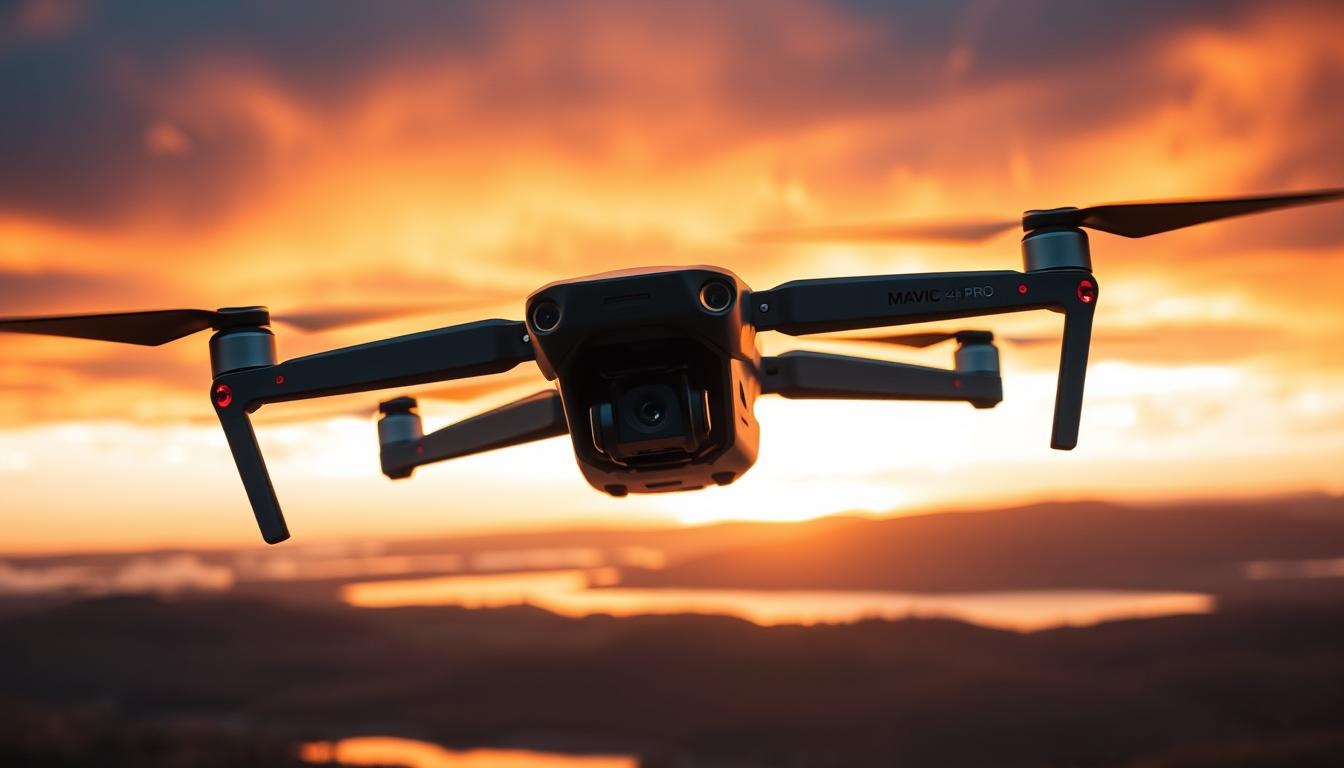
I’m excited to share with you the latest on the DJI Mavic 4 Pro. It’s considered the top camera drone for 2025.
DJI Mavic 4 Pro: The World’s Best Camera Drone for 2025
This drone is made to take amazing aerial shots. I’ll show you its features and how to use it to its fullest.
The Mavic 4 Pro brings new tech to aerial photography and videography.
Key Takeaways
- Advanced camera capabilities for stunning aerial footage
- Improved drone technology for enhanced performance
- Evolution of the Mavic series with new features
- Tips for maximizing the drone’s potential
- Specifications and features of the DJI Mavic 4 Pro
The Evolution of DJI’s Mavic Series
DJI’s Mavic series has always pushed the limits of what’s possible. The Mavic 4 Pro is the latest example of this. It’s considered one of the best drones in 2025, showing years of hard work and improvement.
From Mavic Pro to Mavic 4 Pro: A Journey of Innovation
The Mavic Pro was a big deal when it came out. It had a small design and a top-notch camera. Since then, DJI has kept making things better, adding new features to each model.
Key Advancements in the 2025 Model
The Mavic 4 Pro has some big upgrades. Two main areas where it shines are:
Camera Improvements
The camera on the Mavic 4 Pro is better than before. It can take clearer pictures and work well in low light. This means your videos will look amazing, even when it’s dark.
Flight Performance Enhancements
The Mavic 4 Pro also flies better than its predecessors. It can go farther, faster, and stay steady longer. This makes it a top-notch DJI quadcopter.
| Feature | Mavic Pro | Mavic 4 Pro |
| Camera Resolution | 12MP | 48MP |
| Max Flight Time | 27 minutes | 34 minutes |
| Max Speed | 40 mph | 45 mph |
DJI Mavic 4 Pro: The World’s Best Camera Drone for 2025
The DJI Mavic 4 Pro is a big step up in drone tech. It offers top-notch image quality and smart flight features. As a top model in the DJI Mavic series, it has advanced features. This makes it a leading top aerial photography drone.
Revolutionary Camera Capabilities
The DJI Mavic 4 Pro’s camera is a major breakthrough in aerial photos. Its large sensor and high resolution make stunning images with great detail.
Sensor Size and Resolution
The drone has a high-resolution sensor for amazing image quality. Key specs include:
- Large sensor size for better low-light shots
- High resolution for detailed images
Video Recording Capabilities
The Mavic 4 Pro also shines in video recording. It offers:
- 4K resolution at high frame rates
- Advanced stabilization for smooth footage
Flight Performance Specifications
The DJI Mavic 4 Pro has impressive flight abilities. It has longer flight times and better stability. Its advanced propulsion system makes flying smooth and responsive.
Intelligent Features That Set It Apart
The Mavic 4 Pro has smart features like obstacle avoidance and advanced tracking. These make it perfect for both pros and hobbyists. These features improve the flying experience and make it a top top aerial photography drone.
Unboxing and Initial Setup
When you open the box of your DJI Mavic 4 Pro, you’re starting a journey into advanced UAV technology. The unpacking is easy, with everything neatly arranged.
What’s Included in the Package
The DJI Mavic 4 Pro comes with the drone, a remote controller, batteries, propellers, and cables. You’ll also get a manual and quick start guide to help you begin.
Step-by-Step First-Time Activation Process
To start your DJI Mavic 4 Pro, just follow these steps: 1. Put in the battery and turn on the drone. 2. Switch on the remote controller and link it to your phone. 3. Open the DJI Fly app and follow the prompts to activate.
Essential Firmware Updates
It’s important to keep your drone’s firmware current for the best performance. Firmware updates add new features and improve performance.
How to Check for Updates
In the DJI Fly app, go to settings and look for firmware updates.
Update Installation Process
Just follow the app’s instructions to download and install the latest firmware. Make sure your drone and remote are fully charged while updating.
Mastering the DJI Fly App
To get the most out of your DJI Mavic 4 Pro, mastering the DJI Fly app is key. The app makes it easy to capture stunning aerial footage. It’s designed for a seamless and intuitive user experience.
Navigating the User Interface
The DJI Fly app’s interface is clean and easy to use. When you open it, you see a live feed from the drone’s camera. You also get a range of controls and menus.
How to Customize Flight Settings for Optimal Performance
Customizing flight settings is important for the best performance with your Mavic 4 Pro. The app lets you adjust settings like maximum flight distance and altitude limits. You can also tweak obstacle avoidance settings.
Camera Controls and Parameters
The DJI Fly app gives you full control over your camera. You can fine-tune your shots with exposure settings and focus modes.
Exposure Settings
Adjusting exposure settings helps you capture images with the right light and detail. You can choose from manual, aperture priority, and shutter priority modes.
Focus Modes
The app has different focus modes like auto-focus, manual focus, and continuous focus. This gives you the flexibility to get the effect you want in your footage.
| Feature | Description | Benefit |
| Exposure Settings | Manual, Aperture Priority, Shutter Priority | Capture images with perfect balance of light and detail |
| Focus Modes | Auto-Focus, Manual Focus, Continuous Focus | Flexibility to achieve desired effect in footage |
Essential Pre-Flight Checklist and Safety Procedures
Before you fly your DJI Mavic 4 Pro, make sure you do a few important checks. These steps help ensure a safe and fun flight. They also help you avoid any issues.
Weather and Environmental Considerations
Weather is a big deal when it comes to flying drones. Always check the weather forecast before you go. Stay away from bad weather like strong winds, heavy rain, or very hot or cold temperatures.
The DJI Mavic 4 Pro works best in certain temperatures. Make sure it’s within those ranges for the best performance.
Also, think about where you’re flying. Don’t fly near airports, national parks, or places with sensitive animals. Know the local rules about using drones in different areas.
Battery Management Best Practices
Managing your drone’s batteries is key to safe flying. Always check your batteries for damage or wear before you fly. Follow the maker’s instructions for charging and storing them.
| Battery Condition | Action |
| Full Charge | Ready for Flight |
| Low Charge | Charge Before Flight |
| Damaged | Replace Before Use |
Legal Requirements and Airspace Restrictions in the US
It’s important to know the laws and airspace rules for drones in the US. The Federal Aviation Administration (FAA) sets these rules.
FAA Regulations
The FAA says you need to register drones that weigh more than 0.55 pounds. Learn about FAA rules, including Part 107 for business use.
Using B4UFLY and Other Compliance Tools
Use apps like B4UFLY to check airspace rules and follow FAA rules. These apps give you up-to-date info on no-fly zones and help you plan safe routes.
By following these tips and staying up to date, you can have a safe and fun time with your DJI Mavic 4 Pro camera drone.
Basic Flight Techniques for Beginners
Learning to fly the DJI Mavic 4 Pro is exciting. It starts with basic flight techniques. This guide will help you learn these essential steps.
Step-by-Step Takeoff and Landing Procedures
For a smooth takeoff, place your drone on a flat surface. Make sure the propellers are free from any objects. Here’s how to do it:
- Turn on your DJI Mavic 4 Pro and wait for it to start.
- Open the DJI Fly app and connect to your drone.
- Check the satellite signal strength. It should be strong enough for flying.
- Slowly push the throttle up to lift off.
To land, lower the throttle slowly. Gently touch down on the ground.
How to Master Hovering and Basic Movements
Hovering is key for any drone user. Here’s how to do it:
- Take off and climb to a safe height.
- Slowly lower your throttle to stay steady.
- Adjust the stick slightly to keep the drone stable.
For basic movements, try moving the drone left, right, forward, and backward. Start slow and get faster as you get better.
Understanding and Setting Up Return-to-Home Functions
The Return-to-Home (RTH) function is a safety feature. It brings your drone back to where it took off. There are two types of RTH:
Smart RTH
Smart RTH lets you recall your drone with one tap on the DJI Fly app. It’s great for quick control retrieval.
Low Battery RTH
Low Battery RTH starts when your drone’s battery gets low. To set it up, go to the DJI Fly app settings. Choose the battery level threshold you prefer.
Mastering these basics will make you a skilled DJI Mavic 4 Pro pilot. You’ll be ready to capture amazing aerial shots with one of the best drones in 2025.
Advanced Camera Settings for Stunning Aerial Photography
Take your drone photos to the next level with the DJI Mavic 4 Pro. This drone’s camera can take amazing pictures. But, to get the best results, you need to know how to use its advanced features.
How to Choose Optimal Resolution and Frame Rate Settings
It’s important to pick the right resolution and frame rate for your shots. The DJI Mavic 4 Pro lets you choose from 4K and 8K resolutions. You can also pick frame rates up to 120fps.
For slow-motion, choose a higher frame rate. For regular video, 24fps or 30fps works well.
- 4K at 60fps: Ideal for smooth, high-resolution video.
- 1080p at 120fps: Perfect for slow-motion shots.
Working with ND Filters in Different Lighting Conditions
ND filters are key for controlling light and getting a cinematic look. They let less light in, so you can use wider apertures and slower shutter speeds.
- Use a ND4 filter in bright conditions to avoid overexposure.
- Switch to a ND8 or ND16 filter in very bright conditions or when you want to achieve a slower shutter speed.
HDR and Low-Light Photography Techniques
HDR (High Dynamic Range) photography combines multiple shots at different exposures. It creates one image with a wider range of light and dark.
Bracketing for HDR
To take HDR shots, use the bracketing feature on your DJI Mavic 4 Pro. This lets you take photos at different exposures. Then, you can merge them using photo editing software.
Night Mode Settings
In low light, the Night Mode on your DJI Mavic 4 Pro can help. It reduces noise and enhances details in dark places.
Learning these advanced camera settings will greatly improve your aerial photos with the DJI Mavic 4 Pro. It will make your photos truly stand out.
Cinematic Drone Movements for Professional-Looking Footage
The secret to amazing aerial shots is mastering cinematic drone movements with your DJI Mavic 4 Pro. This advanced UAV tech lets you capture stunning visuals. It can take your content to a pro level.
How to Execute Perfect Reveal Shots
Reveal shots are great for introducing subjects or locations. Start by flying low with your DJI Mavic 4 Pro. Then, slowly go up while moving the camera up. This makes for a dramatic effect that grabs the viewer’s attention.
- Begin at a low altitude to establish context
- Gradually ascend to reveal the subject
- Pan the camera upwards to capture the full scene
Step-by-Step Guide to Mastering Orbit and Tracking Shots
Orbit and tracking shots are key for dynamic footage. To get these shots right, follow these steps:
- Set your DJI Mavic 4 Pro to ‘Orbit’ mode and select your subject
- Adjust the orbit radius and speed to achieve the desired effect
- For tracking shots, lock onto your subject and adjust the camera settings for optimal tracking
Creating Dynamic Altitude Changes
Dynamic altitude changes make your footage more interesting. Here are some techniques to try:
Dronie Technique
The Dronie technique flies your drone backwards while going up. It gives a unique view of your subject. Just set your DJI Mavic 4 Pro to ‘Dronie’ mode.
Helix Pattern Flying
Flying in a Helix pattern around your subject is captivating. To do this, orbit your drone and change altitude while moving.
Mastering these cinematic drone movements boosts your aerial footage’s quality. It makes your shots more engaging and professional.
Troubleshooting and Maintenance
To keep your DJI Mavic 4 Pro in top shape, it’s key to tackle common problems and do regular upkeep. Like any complex gadget, the Mavic 4 Pro might face issues that impact its performance.
Common Issues and Their Solutions
Knowing how to fix common issues can save a lot of time. This ensures your drone is always ready for flight. Some frequent problems include:
- Connectivity Issues: Make sure your drone and controller are correctly paired. Also, keep the firmware updated.
- Calibration Problems: Regularly calibrate your compass and IMU to avoid flight issues.
Connectivity Problems
Connectivity issues often stem from outdated firmware or incorrect pairing. To fix this, update both the drone and controller to the latest firmware. Then, follow the pairing steps in the DJI Fly app.
Calibration Procedures
Calibration is key for smooth flight. Here’s how to calibrate your Mavic 4 Pro:
- Put the drone on a flat surface.
- Open the DJI Fly app and go to the calibration section.
- Follow the app’s instructions to calibrate the compass and IMU.
How to Properly Clean and Maintain Your Mavic 4 Pro
Regular cleaning and upkeep are vital for your drone’s life span. Use a soft cloth to clean the camera lens and the drone’s body. Also, check the propellers for any damage.
Storage and Transportation Best Practices
When storing or moving your Mavic 4 Pro, use the carrying case it comes with. This protects it from harm. Make sure the batteries are not fully charged and keep them in a cool, dry spot.
Conclusion: Taking Your Aerial Creativity to New Heights
The DJI Mavic 4 Pro is a game-changer in aerial photography. It has advanced features and flies well. It’s perfect for both pros and hobbyists who want amazing footage.
This drone is the best of 2025, and I’m excited to see what you’ll create. It’s great for capturing stunning landscapes or documenting events. The Mavic 4 Pro delivers top-notch results.
Keep exploring what your drone can do. Try new settings and techniques. With practice, you’ll soon make professional-looking videos.
FAQ
What makes the DJI Mavic 4 Pro the best camera drone for 2025?
The DJI Mavic 4 Pro stands out in 2025. It has advanced cameras, better flight, and smart features. These make it the top choice in the Mavic series.
What are the key camera improvements in the DJI Mavic 4 Pro?
The DJI Mavic 4 Pro has a bigger sensor and higher resolution. This means you get professional-quality photos and videos. It also handles low light and HDR better.
How do I update the firmware on my DJI Mavic 4 Pro?
To update your DJI Mavic 4 Pro’s firmware, check the DJI Fly app. Follow the steps to download and install the newest firmware.
What are the FAA regulations for flying a drone in the US?
In the US, drone flying has rules. You must register your drone, fly under 400 feet, and avoid no-fly zones. Tools like B4UFLY help you follow these rules.
How do I properly clean and maintain my DJI Mavic 4 Pro?
Keep your DJI Mavic 4 Pro clean by checking sensors, propellers, and the camera often. Store it in a cool, dry place when not flying.
What are some common issues with the DJI Mavic 4 Pro and how can I troubleshoot them?
Issues like connectivity and calibration problems are common. Try restarting the drone, updating firmware, and recalibrating sensors to fix these.
Can I use ND filters with the DJI Mavic 4 Pro?
Yes, ND filters work well with the DJI Mavic 4 Pro. They help reduce glare and improve exposure in bright light.
How do I master cinematic drone movements with the DJI Mavic 4 Pro?
To get great drone shots, practice reveal shots, orbit, and tracking. Use the drone’s advanced modes for dynamic shots.