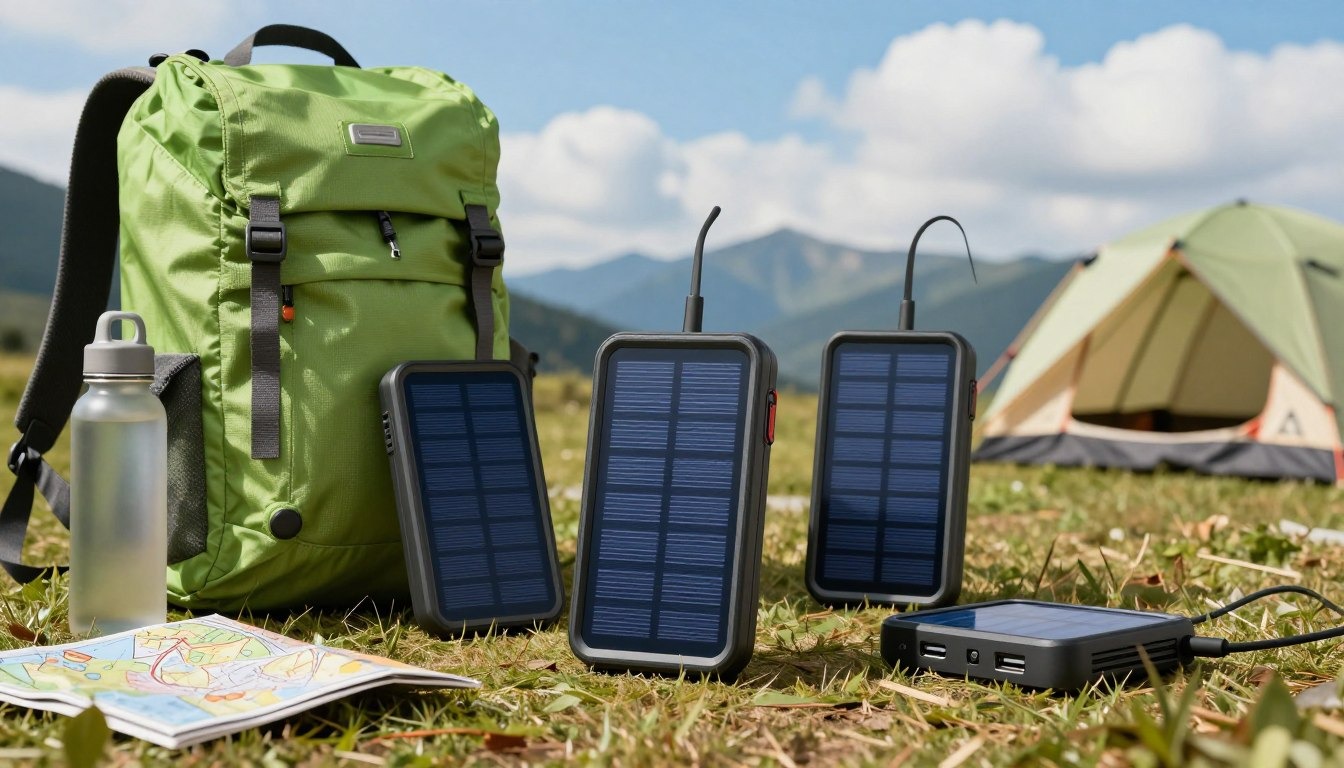
Are you tired of being tied to a power outlet when you travel? Portable solar solutions are a handy and green way to keep your devices charged on the move.
Mobile Solar Chargers, Portable Solar and Power Banks easy to travel uses
With compact and lightweight solar chargers, you can use the sun’s power to charge your gadgets. These smart tools are great for anyone who loves the outdoors, travels a lot, or needs to stay connected in far-off places.
Key Takeaways
- Convenient and eco-friendly power solution for travelers
- Compact and lightweight design for easy carrying
- Ideal for outdoor enthusiasts and remote areas
- Reduces reliance on traditional power outlets
- Environmentally friendly alternative to traditional charging methods
Understanding Solar Charging Technology
Exploring Solar Chargers charging means learning about the tech behind it. It lets you use the sun’s energy to power your devices. This is great for outdoor fans and travelers.
How Solar Chargers Convert Sunlight to Power
Solar chargers turn sunlight into electricity with photovoltaic (PV) cells. These cells release electrons when hit by sunlight, creating an electric current.
Photovoltaic Cell Basics
Photovoltaic cells are the core of solar chargers. They grab sunlight’s energy and turn it into electricity. The better the cells, the more energy they can convert.
Energy Conversion Efficiency
The efficiency of solar chargers depends on the PV cells and tech used. Better chargers can turn more sunlight into electricity. This is key for use in dim light.
Differences Between Solar Chargers and Traditional Power Banks
Solar chargers make power from sunlight, unlike power banks that store it. This lets you charge devices anywhere with sunlight. It’s a green choice for long trips or off-grid adventures.
Key Components of a Solar Charging System
A solar charging system has photovoltaic panels, a charge controller, and a battery. The photovoltaic panels catch sunlight and make electricity. The charge controller manages energy flow to the battery. The battery stores energy for later use, so you can charge devices even without sunlight.
Knowing how these parts work together shows the value of solar charging tech. It lets you stay connected and powered up, wherever you go.
Types of Mobile Solar Charging Solutions
Mobile solar charging solutions come in many forms. They cater to different travel needs and preferences. Whether you’re backpacking or camping, there’s a solar charging solution for you.
Foldable Solar Panels
Foldable solar panels are great for travelers. They are compact and lightweight. This makes them easy to carry on long trips.
Compact Models for Backpacking
Backpackers love compact foldable solar panels. They are light and take up little space. This lets you stay powered without extra weight.
High-Capacity Options for Extended Trips
For long trips, high-capacity foldable solar panels are best. They have multiple cells to produce more energy. This keeps your devices charged all trip long.
Integrated Solar Power Banks
Integrated solar power banks are a mix of a power bank and solar panels. They let you charge devices using the sun. These are great for travelers needing reliable power.
Window-Mounted Solar Chargers
Window-mounted solar chargers are perfect for car trips. They attach to your car’s window. This gives you a steady power source for your devices.
Wearable Solar Technology
Wearable solar technology is the newest in mobile solar charging. From solar-powered backpacks to jackets, these devices charge your gadgets while keeping your hands free.
When choosing a mobile solar charging option, think about your travel needs. With so many choices, you’ll find the perfect one for your next adventure.
How to Select the Right Solar Charger for Your Travel Needs
Choosing the right solar charger for travel is important. It’s not just about picking any charger. You need to think about what you really need.
Assessing Your Power Requirements
First, figure out how much power your devices use. This helps you pick the right solar charger. Knowing this can make a big difference.
Calculating Device Power Consumption
Find out how much power your devices need. This is usually in watt-hours (Wh). Check your device’s manual or the manufacturer’s website for this info. For example, a phone might need 5V/2A (10W), while a laptop could need 20V/3.25A (65W).
Determining Necessary Capacity
After knowing your devices’ power needs, figure out how much energy you’ll need for your trip. Think about how long you’ll be traveling and how many devices you’ll charge. A compact solar charger with more capacity might be needed for longer trips or charging many devices.
Considering Weight and Portability Factors
The weight and how easy it is to carry your solar charger are key. This is very important for backpackers or those with little space. Look for foldable solar panels or solar power banks that are both compact and powerful.
Evaluating Charging Efficiency and Speed
How well and fast a solar charger can charge your devices matters a lot. Good solar panels turn sunlight into electricity well. Fast charging means your devices will be ready to go quickly.
Weather Resistance and Durability Features
Since you’ll use your solar charger outside, it needs to be weather-resistant and durable. Choose chargers with waterproof or water-resistant casings. They should also be built to last through different weather conditions.
By looking at your power needs, weight, charging speed, and weather resistance, you can find the perfect solar charger for your travels.
Step-by-Step Guide to Setting Up Your Mobile Solar Charger
To get the most out of your mobile solar charger, follow these simple steps. This guide will help you set it up right. You’ll be able to charge your devices efficiently on the go.
Unpacking and Initial Inspection
Start by unpacking your mobile solar charger carefully. Check it for any damage. Make sure all parts, like the solar panels and cables, are there and in good shape.
Finding the Ideal Positioning for Maximum Sunlight
It’s important to position your solar charger right for the best sunlight. Optimal sunlight exposure boosts your device’s performance.
Using Angle Indicators
Many solar chargers have angle indicators. These help you adjust the panels for better sunlight. Use them to get the most sunlight.
Adjusting Throughout the Day
The sun’s position changes all day. So, you need to adjust your charger’s angle often. This ensures you get the most sunlight.
Connecting Devices Properly
After setting up your charger, connect your devices as the maker says. Make sure the connections are tight to avoid problems.
Monitoring Charging Progress
Watch how your devices are charging. Most chargers show their status. This lets you see how well your charger is working.
| Step | Description | Tips |
| 1. Unpacking | Carefully unpack and inspect the solar charger. | Check for damage and ensure all components are included. |
| 2. Positioning | Position the solar charger for maximum sunlight. | Use angle indicators and adjust throughout the day. |
| 3. Connecting | Connect devices according to the manufacturer’s instructions. | Ensure secure connections to avoid charging issues. |
| 4. Monitoring | Monitor the charging progress. | Use the charger’s indicators to track charging status. |
Mobile Solar Chargers, Portable Solar and Power Banks Easy to Travel Uses
Travelers need a reliable power source, and mobile solar chargers are a great option. They are portable and efficient, fitting well into travel needs.
Charging Smartphones and Tablets On-the-Go
Mobile solar chargers are great for keeping phones and tablets charged. They’re essential for staying connected in new places. They charge devices using the sun’s energy, making them perfect for travel.
Powering Cameras and Photography Equipment
Photography lovers will find mobile solar chargers very useful. They power cameras and lenses, so you never miss a photo. Some chargers have special ports for cameras, adding to their versatility.
Supporting GPS and Navigation Devices
GPS devices are key for finding your way in remote areas. Mobile solar chargers keep them running, helping you stay on course. This is great for hikers and backpackers.
Emergency Power for Communication Devices
In emergencies, keeping in touch is crucial. Mobile solar chargers ensure your devices stay charged. They could be a lifesaver in critical times.
Charging Wearable Technology
Wearable tech, like smartwatches and fitness trackers, also benefits from mobile solar chargers. They keep your devices charged, keeping you connected and monitored on your travels.
| Device | Power Requirement | Solar Charging Time |
| Smartphone | 5V, 2A | 2-3 hours |
| Camera | 12V, 1A | 4-5 hours |
| GPS Device | 5V, 1A | 3-4 hours |
Understanding how mobile solar chargers work helps travelers choose the right devices for their trips. They’re great for charging phones, powering cameras, and supporting GPS. Mobile solar chargers are a versatile and green option for travelers.
How to Use Solar Chargers in Different Travel Scenarios
As you plan your next adventure, learning how to use solar chargers is key. They’re a great way to keep your devices charged on the move. Solar chargers are popular among travelers for this reason.
Hiking and Backpacking
When you’re hiking or backpacking, think about the weight and how to attach your solar charger. You can attach a portable solar panel to your backpack. Or, use a solar-powered battery pack.
Mounting Options While Moving
Mount your solar panel on your backpack with clips or straps. This lets you charge your devices as you move.
Weight Distribution Tips
Spread out the weight of your solar charger to avoid discomfort. Attach it to the back or bottom of your backpack.
Camping and Outdoor Adventures
For camping, place your solar charger in a sunny spot. Choose a place with lots of sunlight.
Road Trips and Vehicle-Based Travel
On road trips, use a solar charger that fits on your car’s dashboard or rear window. This way, you can charge your devices while driving.
International Travel Considerations
Traveling abroad? Be aware of the climate and how it affects your solar charger’s performance.
Adapting to Different Climate Conditions
In hot climates, your solar charger might not work as well. Keep it clean and out of direct sunlight when not in use.
Security and Customs Concerns
Remember local customs rules about solar chargers and batteries. Some places have restrictions on certain batteries.
Here’s a quick guide to using solar chargers in various travel situations:
| Travel Scenario | Key Considerations |
| Hiking and Backpacking | Mounting options, weight distribution |
| Camping and Outdoor Adventures | Sunlight exposure, setup |
| Road Trips and Vehicle-Based Travel | Attachment options, charging while driving |
| International Travel | Climate conditions, customs regulations |
Troubleshooting Common Issues with Portable Solar Chargers
Learning to fix common problems with your portable solar charger can make outdoor trips better. Whether you’re hiking, camping, or on a road trip, knowing how to solve issues keeps you connected and powered. This is key for a great experience.
Dealing with Slow or Inconsistent Charging
Slow or uneven charging can be annoying, making it hard to use your devices. Clouds and low light are common causes.
Cloud Cover Solutions
On cloudy days, your solar charger might not work as well. Here’s what you can do:
- Place your solar charger at the best angle to catch sunlight.
- Choose a solar charger with a high-efficiency photovoltaic cell.
Low-Light Optimization
In dim light, try these:
- Use a solar charger with a built-in battery to save energy during bright times.
- Keep your solar charger clean to absorb more energy.
Resolving Connection Problems
Connection troubles often stem from loose cables. Check your cables and make sure they’re tight. Try different cables or ports to find the issue.
Addressing Battery Performance Issues
Battery performance can drop over time for many reasons.
Capacity Degradation
If your battery doesn’t hold charge like before, it might be degrading. To keep your battery strong:
- Don’t let it fully drain.
- Store it in a cool, dry spot when not using it.
Temperature-Related Problems
Extreme temperatures can harm your battery. Keep your solar charger within its recommended temperature range.
By using these tips, you can fix common problems with your portable solar charger. This way, you’ll have a reliable power source for your outdoor adventures.
Maintaining Your Solar Charging Equipment
Proper care and maintenance of your solar charging equipment can extend its lifespan. It ensures reliable power when you need it. Regular maintenance boosts performance and catches issues early.
Cleaning Solar Panels for Optimal Performance
Keeping your solar panels clean is key for best performance. Dirt, dust, and debris can lower efficiency. To clean your solar panels:
- Gently wipe the surface with a soft, dry cloth.
- For stubborn dirt, use a damp cloth with mild soap.
- Avoid harsh chemicals or abrasive materials that could damage the panels.
Proper Storage Techniques
Store your solar charging equipment in a cool, dry place away from sunlight. Make sure it’s fully charged before storing. Use protective cases or bags to prevent damage.
Extending Battery Lifespan
To extend your solar charger’s battery life, avoid deep discharging. Keep the battery level between 20% and 80% if you can. Also, avoid extreme temperatures.
When to Replace Components
Know when to replace parts of your solar charging equipment. If performance drops or there’s physical damage, it’s time for a replacement. Check for worn-out cables, damaged panels, or failing batteries.
By following these maintenance tips, your solar charging equipment will stay in top shape. This ensures reliable power for your travels.
Conclusion
When you’re out exploring or traveling to far-off places, it’s key to stay connected and powered. Mobile solar chargers and portable power banks have changed how we keep our devices charged. They offer a dependable and green way to power up.
There are many types of mobile solar chargers to pick from, fitting every travel style. Whether you’re trekking, camping, or driving, these gadgets keep your devices charged and ready. They make sure you’re always connected.
Knowing how to pick, set up, and care for your mobile solar charger is important. It lets you enjoy the benefits of these devices. So, when planning your next trip, add mobile solar chargers and portable solar and power banks to your list. They make traveling easy and worry-free.
FAQ
What are the benefits of using a portable solar charger while traveling?
A portable solar charger is a green way to keep your devices charged. It cuts down on your need for traditional power sources. This also helps reduce your carbon footprint.
How do I choose the right solar charger for my needs?
First, think about how much power you need. Also, consider the charger’s weight, how easy it is to carry, and its efficiency. Make sure it can handle your device’s power needs.
Can I use a solar charger in cloudy or low-light conditions?
Yes, you can use a solar charger in cloudy or low light. But, look for chargers that work well in these conditions. They usually have special features for this.
How do I maintain my solar charging equipment?
Keep your solar panels clean for best performance. Store your gear right and follow the maker’s advice. This will help your battery and other parts last longer.
Are portable solar chargers suitable for international travel?
Yes, they’re great for traveling abroad. Just be ready for different weather and know about any travel rules for your charger.
Can I charge my devices directly with a solar charger?
Many solar chargers have built-in batteries or power banks. This lets you charge your devices straight away. Some also have USB ports for direct charging.
What is the average lifespan of a portable solar charger’s battery?
The battery life of a solar charger varies. It depends on the maker, model, and how much you use it. Usually, a battery lasts for hundreds of charges.
How do I troubleshoot common issues with my portable solar charger?
Check the maker’s guide for tips on fixing problems. Issues like slow charging or battery problems can often be fixed by adjusting the charger’s position or cleaning the panels.