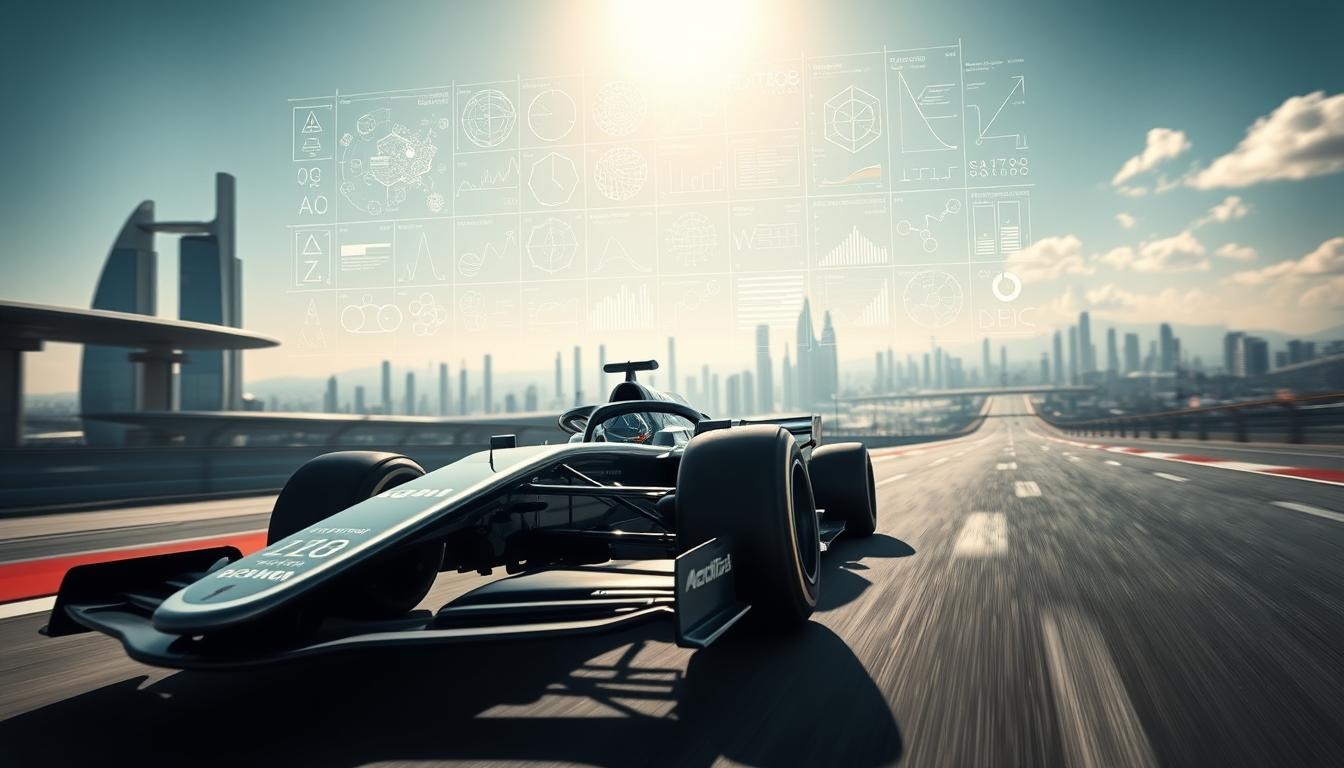
You’re about to enter the exciting world of Formula 1 racing. Here, exceptional skill and mental toughness are as vital as the car’s tech.Race Highlights 2024
The 2024 and 2025 United States Grand Prix have seen amazing driving, pushing human limits and scientific innovation.
Race highlights 2024 and 2025 united state Grand Prix general science mind
As you look into these events, you’ll see how technology and human psychology come together in top racing.
Key Takeaways
- The United States Grand Prix has consistently delivered thrilling performances in 2024 and 2025.
- Mental preparation is key for Formula 1 drivers’ success.
- The mix of science and racing drives the sport’s growth.
- Drivers need a special mix of physical and mental skills.
- The technological advancements in Formula 1 aim for speed and performance.
- Race Highlights 2024
The Evolution of the United States Grand Prix
The United States Grand Prix has changed a lot since it started. It’s now a top racing event. You’ll see how it grew and became more popular as you learn about its history and today.
Historical Context of the US Grand Prix
The first US Grand Prix was in 1959 at Sebring, Florida. It has moved to different places like Riverside, California, and Indianapolis. The race has been a key part of F1, changing with its location and fame.Race Highlights 2024
Circuit of the Americas: Technical Track Analysis
The Circuit of the Americas (COTA) in Austin, Texas, hosts the US Grand Prix since 2012. It’s a 3.4-mile track with tough corners and height changes. Drivers need great skills to handle the turns and brakes. The track’s design makes cars better for fast corners and long straights.
- Key features of COTA include:
- 20 turns, including a tough hairpin at Turn 11
- Significant elevation changes, affecting aerodynamics
- Long straights, allowing for high speeds
- Race Highlights 2024
The Growing Popularity of F1 in America
Formula 1’s popularity in the US has grown a lot in the last ten years. Drivers like Lewis Hamilton and the Netflix series “Formula 1: Drive to Survive” helped. The United States Grand Prix is now a big event, drawing fans from everywhere.
United States Grand Prix Circuit
Looking at the US Grand Prix’s evolution, it’s clear it’s a highlight of F1. With its history, tough circuit, and more fans, it will keep doing well in the future.
How to Prepare for Analyzing Grand Prix Events
To start analyzing Grand Prix events, you need the right tools and a good viewing spot. Being ready is key to enjoying these events.Race Highlights 2024
Essential Tools for Scientific Race Analysis
For scientific Grand Prix analysis, you’ll need certain tools. These include:
- Telemetry software: This lets you check driver and car data live.
- Timing and scoring systems: They give you lap times, sector times, and race positions.
- Video analysis tools: These let you watch race footage frame by frame. They help you see driver choices and car performance.
Grand Prix analysis tools
Setting Up Your Data Collection System
A strong data collection system is vital for Grand Prix analysis. This means:
- Identifying data sources: Figure out what data you need, like lap times or tire temperatures.
- Setting up data logging: Use software or apps for F1 data analysis to log and organize your data.
- Organizing your data: Make a system to categorize and store your data for easy access during the race.
- Race Highlights 2024
Creating an Optimal Viewing Environment
Your viewing area can greatly affect your analysis. Think about:
- High-quality display: Get a good monitor or TV for fast action without lag.
- Comfortable seating: Make sure you have a comfy spot for long races.
- Minimal distractions: Set up your area to avoid distractions, so you can focus on the race.
By following these steps, you’ll be ready to dive into Grand Prix analysis. You’ll enjoy the science highlights and grand prix highlights that make F1 racing exciting.Race Highlights 2024
Step-by-Step Analysis of 2024 United States Grand Prix Qualifying
The 2024 United States Grand Prix qualifying session was intense. Top drivers competed fiercely, pushing their cars to the limit. This showed the technical and psychological sides of Formula 1 racing.
Decoding Telemetry Data from Top Performers
Telemetry data is key to understanding driver performance in qualifying. It helps teams see how drivers handle the car and where they can improve. For example, it shows how drivers manage tires, brakes, and speed.
Analyzing Driver Psychology During Pressure Moments
Driver psychology is vital during qualifying’s high-pressure moments. Drivers need to stay focused and calm. Looking into driver psychology can show how top drivers handle stress and stay at their best.
Technical Innovations That Influenced Qualifying Results
Technical innovations were crucial in the 2024 United States Grand Prix qualifying. Two main areas were aerodynamic breakthroughs and new suspension systems.Race Highlights 2024
Aerodynamic Breakthroughs
Aerodynamic improvements were key to faster lap times. Teams with innovative aerodynamic solutions had an advantage.
Suspension System Developments
New suspension systems helped drivers go faster through corners. This led to quicker overall lap times. Here’s how these innovations affected qualifying:
| Technical Innovation | Impact on Qualifying |
| Aerodynamic Breakthroughs | Improved lap times by optimizing airflow |
| Suspension System Developments | Enhanced cornering speed and stability |
Understanding these innovations helps teams improve their strategies for future races.
Race Highlights 2024 and 2025 United State Grand Prix General Science Mind
The 2024 United States Grand Prix was filled with moments that showed the mix of skill and mental strength. It was a display of advanced science and the mental toughness needed in Formula 1.
Key Race-Defining Moments of the 2024 Grand Prix
The 2024 Grand Prix had moments that changed the race. A key moment was when the winning team made a smart pit stop. This gave their driver a big lead over others.Race Highlights 2024
Max Verstappen said, “The quick tire change by the pit crew was a game-changer.”
The race was also known for its intense battles. Drivers pushed their cars hard. The data showed they faced g-forces of up to 5g while cornering. This showed the physical and mental challenges of F1.
Scientific Principles Behind Winning Strategies
The winning strategy in 2024 was based on understanding tires and aerodynamics. Teams that picked the right tires for the conditions had a big advantage.
“Tire management is crucial in F1, and our team’s ability to predict tire wear gave us the edge we needed,”
saidChristian Horner, Team Principal of Red Bull Racing.Race Highlights 2024
Mental Preparation Techniques Used by Top Drivers
Top F1 drivers use mental tricks to handle the pressure. One trick is focus management, keeping their mind sharp for a long time.
Focus Management Under Extreme Conditions
Drivers use visualization and mindfulness to stay focused. For example, Lewis Hamilton talks about how meditation helps him stay calm under pressure.Race Highlights 2024
Decision-Making Psychology in Critical Moments
In key moments, drivers must make quick decisions that can win the race. They need to be aware of their surroundings and stay calm.
Sebastian Vettel said, “The ability to stay focused and make the right decisions in high-pressure situations is what separates the champions from the rest.”
By learning about the science and mental tricks behind F1, you can appreciate its complexity more.
How to Interpret Weather Impact on Race Performance
Knowing how to read weather data can change the game in Formula 1. Weather affects how cars perform, how tires last, and race strategies. Fans and analysts can better enjoy the sport and predict outcomes by understanding weather’s impact.
Analyzing Tire Performance in Changing Conditions
Tire performance changes a lot with the weather. Rain, temperature, and humidity can make tires grip the track differently. In rain, special tires help keep contact with the track. In dry conditions, the right tire compound is chosen for the temperature and track.Race Highlights 2024
To get tire performance, look at the tires, the weather forecast, and past data. Advanced telemetry data shows how tires are doing during the race. This helps teams decide when to pit and change tires.
Understanding Aerodynamic Adjustments for Weather
Adjusting a car’s aerodynamics is key for weather. Aerodynamic drag and downforce change with wind and air density. Teams tweak settings to balance drag and downforce based on the weather.
In rain, less downforce helps with stability. In dry, more downforce is better for corners. Knowing this helps predict car performance in different weather.
Predicting Strategic Decisions Based on Weather Patterns
Weather forecasts are vital for race strategy. Teams use weather models to plan their moves. This includes when to pit, change tires, and adjust aerodynamics.
By looking at past weather and forecasts, you can guess team strategies. For example, if rain is coming, teams might switch tires or pit early to avoid bad weather.
Grasping how weather, car performance, and strategy interact deepens your Formula 1 analysis. Keeping up with weather and how teams react can offer a richer understanding of the sport.
Guide to Analyzing Team Strategies for the 2025 United States Grand Prix
The 2025 United States Grand Prix is coming, and knowing team strategies is key. Fans and analysts will find it exciting. Teams will use new tactics to beat their rivals.Race Highlights 2024
Evaluating Team Adaptations to 2025 Regulations is vital. Teams must adjust to new rules, which will change the sport a lot.
Evaluating Team Adaptations to 2025 Regulations
The 2025 rules will bring new challenges and chances for teams. Looking at how teams adjust can show their strategic plans. Regulation changes often lead to innovative solutions. This helps us understand team strategies better.
Predicting Driver Performance Based on 2024 Data
Looking at 2024 driver performance can tell us a lot about 2025.
“Consistency is key in Formula 1, and drivers who performed well in 2024 are likely to continue their strong performance in 2025.”
Technological Innovations Expected for 2025
Technology is a big deal in Formula 1, and 2025 will see big changes. The focus will be on Power Unit Advancements and Sustainable Racing Technologies.
Power Unit Advancements
Power units will get better, making cars faster and more efficient. Teams are always trying to do more, and 2025 will be no exception.
Sustainable Racing Technologies
Sustainable tech is getting more important in Formula 1. The 2025 season will bring more green technologies, helping the sport’s sustainability goals.
By understanding these tech changes and team adjustments, we can see the strategies for the 2025 United States Grand Prix more clearly.
How to Develop Your Own Race Prediction Model
Creating your own race prediction model can give you a deeper look into what makes Formula 1 racing successful. It’s about building a detailed framework that looks at many factors that affect race results.
Creating a Statistical Framework for Race Analysis
A solid statistical framework is key for any race prediction model. You must find important performance indicators (KPIs) like lap times, how tires wear out, and how fast pit stops are. Historical data analysis is vital for figuring out these KPIs.
| KPI | Description | Importance |
| Lap Times | Average time taken to complete a lap | High |
| Tire Degradation | Rate at which tires lose performance | Medium |
| Pit Stop Efficiency | Time taken for pit stops | High |
Incorporating Driver Psychology Factors
Driver psychology is a big deal in races. Things like driver experience, mental preparation, and stress handling can really affect how well a driver does. Adding these to your model can make it more accurate.
Testing Your Model Against Historical Data
After making your race prediction model, it’s important to test it with historical data. This means seeing how well your model does against real race results from past Grand Prix events.Race Highlights 2024
By doing these steps and keeping your model sharp, you can make a reliable tool for predicting races. This will make your Formula 1 racing experience even better.
Enhancing Your Grand Prix Experience Through Scientific Understanding
To truly enjoy the Grand Prix, you need more than just a love for racing. You must also understand the science behind it. This knowledge lets you see the race in a whole new light.
Techniques for Real-Time Race Analysis
For real-time analysis, keep an eye on telemetry data and driver strategies. Also, watch how weather impacts tire performance. Real-time analysis helps you guess what might happen next and see the team’s smart moves.
Joining Communities of Technical Racing Enthusiasts
Connecting with others who love F1’s technical side can make your experience better. Look for online forums, social media groups, and websites dedicated to F1. These places are great for talking about race strategies, new tech, and driver skills.
Resources for Deepening Your Scientific Knowledge of F1
There are many ways to learn more about F1. You can read books on its technology, take online courses on aerodynamics and engines, or watch documentaries. Expanding your knowledge will make you appreciate the Grand Prix even more.
By using real-time analysis, joining communities, and learning more, you can really improve your Grand Prix experience. This approach lets you enjoy the sport on a deeper level, making it more fun and fulfilling.Race Highlights 2024
Conclusion: The Future of Scientific Analysis in Formula 1 Racing
You now know how important scientific analysis is in Formula 1 racing. The sport will keep growing, thanks to new tech and data collection. The 2024 and 2025 United States Grand Prix showed how key telemetry data, driver psychology, and strategy are.
Looking to the future, AI and machine learning will make race predictions and team strategies even better. You’ll see more focus on analyzing data in real-time. This will help teams make smart choices during races. The future of Formula 1 is closely tied to scientific analysis, bringing new innovation and excitement.
By understanding science, you’ll get more out of F1. As the sport moves forward, keeping up with scientific analysis will make your fan experience even better. The future of scientific analysis in Formula 1 racing is looking great, and you’re ready to enjoy the sport’s complexities.
FAQ
What are the key factors to consider when analyzing the 2024 and 2025 United States Grand Prix?
When looking at the 2024 and 2025 United States Grand Prix, think about a few things. Look at how drivers perform, the cars’ tech specs, and how they manage tires. Also, consider the weather and the teams’ strategies.
How does the Circuit of the Americas impact the United States Grand Prix?
The Circuit of the Americas is a tough track. It needs a good understanding of car handling and tire management. Its layout and elevation changes make it hard for drivers and teams.Race Highlights 2024
What role does weather play in the United States Grand Prix?
Weather is very important in the United States Grand Prix. It affects tire performance, car handling, and driver strategy. Knowing the weather and its effects is key to success.
How can I improve my understanding of the scientific principles behind Formula 1 racing?
To get better at understanding F1, study the cars’ tech specs and analyze telemetry data. Also, learn about the materials and tech used in car construction.
What are some key mental preparation techniques used by top F1 drivers?
Top F1 drivers use mental tricks like focus management, visualization, and positive self-talk. These help them deal with the high pressure of F1 racing.
How can I develop my own race prediction model for the United States Grand Prix?
To make your own race prediction model, create a statistical framework. Include driver performance, car tech, and weather. Then, test it with historical data.Race Highlights 2024
What resources are available for deepening my scientific knowledge of F1?
There are many resources out there. Online forums, technical articles, and books can all help deepen your F1 knowledge. They keep you updated with the latest in the sport.
How can I join communities of technical racing enthusiasts?
To connect with other racing fans, join online forums, go to racing events, and use social media groups. These places are great for sharing knowledge and insights.Race Highlights 2024