Exploring deep forests is exciting, but it’s risky, like running into venomous snakes. It’s important for adventurers to know wilderness safety tips to handle these dangers.Surviving the Wild
:Surviving the Wild: How Adventurers Handle Snake Attacks in Deep Forests
When we venture into the wild, we might meet wildlife, including snakes. Knowing how to act during a snake attack could save your life.
Key Takeaways
- Understanding snake behavior in deep forests
- Essential wilderness safety tips for adventurers
- Effective strategies for handling snake encounters
- Preparation is key to surviving snake attacks
- Staying calm during a snake encounter is crucial
- Surviving the Wild
The Reality of Snake Dangers in American Forests
Exploring America’s deep forests is exciting, but knowing about snake dangers is key. The wilderness has many snake species, some venomous and dangerous to adventurers.
A large, coiled snake slithers gracefully across the lush, mossy forest floor, its scales glimmering in the dappled sunlight that filters through the dense canopy. Towering ferns and ancient, twisted tree roots frame the scene, creating a sense of immersive wilderness. The snake’s head is raised, its tongue flicking as it tests the air, alert and ready to defend its territory. The overall atmosphere is one of natural power and untamed beauty, capturing the essence of the dangers that lurk within the American forests.Surviving the Wild
Identifying Venomous vs. Non-Venomous Species
Knowing how to tell venomous from non-venomous snakes is vital for safety. Venomous snakes have venom that can harm humans.
Rattlesnakes, Copperheads, and Water Moccasins
Venomous snakes like rattlesnakes, copperheads, and water moccasins are found in American forests. Rattlesnakes warn with their rattle before striking. Copperheads have copper-colored heads, and water moccasins are aggressive near water.
Look-alike Non-Venomous Species
Some non-venomous snakes look like venomous ones to avoid danger. For example, the gopher snake looks like a rattlesnake and acts like one, confusing hikers.
Understanding Snake Behavior and Seasonal Activity
Snakes are cold-blooded, meaning they move more in warm weather. Knowing this helps adventurers avoid snakes.
In spring and summer, snakes are active, basking and hunting. In fall, they hide for hibernation, but are still around.
Essential Wilderness Preparation for Snake Country
When we head into areas with lots of snakes, being ready is key. The right tools and knowledge can help avoid bad snake encounters. Here, we’ll talk about the must-haves for any adventurer going into snake territory.
Protective Gear That Actually Works
Protective gear is our first defense against snake bites. Snake gaiters and boots are top choices. Gaiters cover your boots and pants, adding a layer against snake fangs.
Snake Gaiters and Boots
Choose snake gaiters and boots that stop snake bites. High-quality gaiters block snake fangs. Pair them with strong boots for full leg protection.Surviving the Wild
Appropriate Clothing Choices
The right clothes can also help. Long pants and long-sleeved shirts made from thick fabric prevent bites. Stay away from shorts and sandals in snake areas.
| Clothing Item | Snake Bite Protection Level | Recommendation |
| Shorts | Low | Avoid in snake areas |
| Long Pants | High | Preferred choice |
| Sandals | Low | Avoid in snake areas |
| Boots with Gaiters | Very High | Highly Recommended |
First Aid Supplies for Snake Encounters
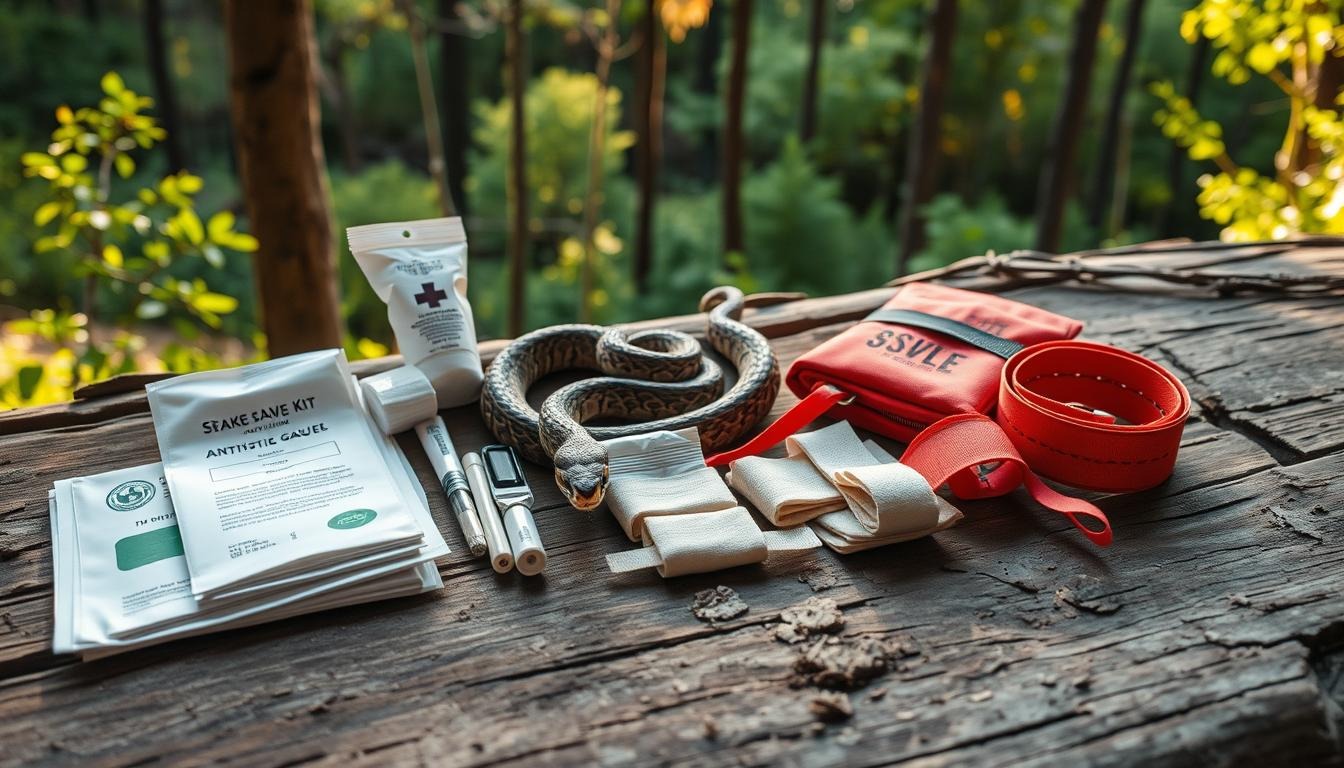
Even with precautions, snake bites can still happen. Having first aid supplies ready is vital. A basic kit should have bandages, antiseptic wipes, and a guide for treating bites.
A well-stocked snake bite first aid kit laid out on a rugged wooden surface, illuminated by warm natural light filtering through a forest canopy. In the foreground, the kit contains essential items – sterile gauze, antiseptic wipes, compression bandages, and a tourniquet – all neatly arranged. The middle ground features a coiled rattlesnake model, hinting at the dangerous wildlife that necessitates such preparedness. The background showcases a lush, green forest backdrop, conveying the remote, wilderness setting where such kits are crucial. The overall scene evokes a sense of readiness and self-reliance required for adventuring in snake country.
Emergency Communication Tools and Their Limitations
In case of a snake bite, having a way to call for help is crucial. Satellite phones or cell phones with a backup power are key. But, remember, in remote places, signals might not reach.Surviving the Wild
By getting the right gear, knowing how to use it, and understanding our communication tools’ limits, we can stay safer in snake country.
Strategic Prevention: Minimizing Snake Encounter Risks
Exploring deep forests needs more than bravery; it requires a careful plan to avoid snakes. By being smart about how we explore the wilderness, we can lower the chance of running into snakes.
Trail Selection and Navigation Techniques
Picking the right trail is key to avoiding snakes. We should choose trails that are well-marked and often used. These trails are less likely to have snakes.
Using a map and compass helps us stay on the right path. It also keeps us away from areas where snakes are more common.
Safe Campsite Selection Criteria
When picking a campsite, look for places without tall grass and brush. These are snake habitats. Also, avoid rocky areas and logs, as snakes hide there.
Setting up camp on high ground can also lower the risk of snake encounters.
Timing Your Activities to Reduce Risk
Snakes are most active at certain times of the day and year. By planning our hikes and outdoor activities for other times, we can avoid them. Peak snake activity hours are usually early morning and late afternoon.Surviving the Wild
Knowing when snakes are most active in the area we’re exploring is also important.
Developing Snake Awareness: Detection Skills from Expert Adventurers
In the wilderness, knowing how to scan your surroundings is key to avoiding snake bites. As adventurers, we need to be very aware of our environment. This helps us spot potential dangers before they become a problem.
Visual Scanning Techniques While Hiking
Expert adventurers use special ways to spot snakes while hiking. They scan the trail ahead for any signs of snakes. They also watch for movements or still objects that might mean a snake is nearby.
It’s important to observe the surroundings too. This includes rocks, logs, and thick vegetation where snakes like to hide.
Recognizing Warning Sounds and Behaviors
Snakes often give warning signs before they bite. Knowing these signs is key to staying safe. For example, a rattlesnake’s rattle is a clear warning.Surviving the Wild
Other signs include hissing, coiling, or vibrating their tails. Spotting these behaviors lets adventurers safely back away from danger.Surviving the Wild
| Warning Sign | Description | Action to Take |
| Rattling Sound | A clear warning signal from rattlesnakes. | Slowly back away, giving the snake a clear path to leave. |
| Hissing | A sign of agitation or fear in snakes. | Maintain a safe distance and avoid sudden movements. |
| Coiling | A preparatory stance for a potential strike. | Give the snake plenty of space and slowly back away. |
Surviving the Wild: How Adventurers Handle Snake Attacks in Deep Forests
As adventurers, we’ve learned that surviving snake encounters is about preparation and instinct. When we venture into the wilderness, knowing how to handle snake attacks is key. This knowledge boosts our safety and survival chances in deep forests.
Case Studies: Successful Snake Encounter Survivals
Many cases show how to survive snake encounters. For example, a hiker in Colorado stayed calm after a rattlesnake bite. He slowly hiked back to his vehicle and got medical help. This shows the value of staying calm and having a plan.
In the Amazon rainforest, a group of adventurers avoided a deadly encounter with a fer-de-lance. Their knowledge of snake behavior saved them. Their preparedness and awareness were crucial.
Professional Wilderness Guides’ Avoidance Strategies
Professional guides stress the need for awareness and preparedness in snake areas. They suggest wearing protective gear like long pants and boots. Staying on marked trails also helps avoid snakes.Surviving the Wild
Guides also recommend hiking in groups and making noise. This approach reduces the risk of dangerous encounters.
Psychological Preparation for Potential Encounters
Psychological preparation is key to surviving snake encounters. Fear can cloud judgment, so adventurers must mentally prepare to stay calm and make rational decisions.Surviving the Wild
Learning about snake behavior and safety protocols boosts confidence. This mental readiness is as important as any physical precaution.
Face-to-Face with a Snake: Step-by-Step Response Protocol
Knowing how to react when faced with a snake is crucial for wilderness safety tips. When we encounter a snake in the wild, our initial reaction can significantly impact the outcome of the situation.Surviving the Wild
The key to handling snakes in the wild is to remain calm and follow a step-by-step response protocol. This protocol is designed to minimize the risk of a snake strike and ensure our safety.
The Freeze and Assess Technique
The first step when encountering a snake is to freeze. This immediate halt allows us to assess the situation without provoking the snake. By staying still, we give the snake an opportunity to become aware of our presence and potentially retreat.
- Stop moving immediately
- Assess the snake’s position and movement
- Look for a safe path to retreat
- Surviving the Wild
Safe Retreat Methods That Prevent Strikes
After assessing the situation, the next step is to slowly back away from the snake. This handling snakes in the wild technique is crucial for preventing strikes. It’s essential to move slowly and deliberately, giving the snake ample space to leave.
Some key points to remember during a safe retreat include:
- Maintain a safe distance from the snake
- Avoid sudden movements Surviving the Wild
- Do not turn your back on the snake until you’re at a safe distance
Using Hiking Tools as Defensive Barriers
In situations where a snake feels threatened or cornered, it may become aggressive. In such cases, having a defensive barrier can be lifesaving. Using hiking tools like a trekking pole or a backpack can provide a safe distance between us and the snake.
By understanding and applying these wilderness safety tips, we can minimize the risk associated with snake attacks. Remember, the goal is to coexist peacefully with wildlife and enjoy the beauty of nature without compromising our safety.
Emergency Response: Immediate Actions After a Snake Bite
A snake bite in the wild needs quick and right action. Stay calm and follow steps to avoid serious harm or death.
The First Critical Minutes: Step-by-Step Actions
Right after a snake bite, do these things:
- Remain calm to slow down the heart rate and reduce the spread of venom.
- Remove any constrictive items like watches or tight clothing that may constrict the affected area.
- Keep the affected limb below heart level to reduce blood flow and slow the spread of venom.
- Do not attempt to suck out the venom or use a tourniquet, as these methods are ineffective and can cause more harm.
- Clean the wound with soap and water, but avoid applying any harsh chemicals or ointments.
Dangerous Myths That Worsen Outcomes
There are myths about snake bite treatments that can make things worse. These include:
- Using a tourniquet, which can cut off blood flow completely and lead to more severe damage.
- Applying ice, which can cause further tissue damage.
- Attempting to capture the snake if it’s not safe to do so, as this can lead to additional bites.
It’s important to ignore these myths and stick to proven first aid methods.
Documenting the Snake for Medical Personnel
If it’s safe, documenting the snake helps medical staff. You can:
- Taking a clear photo of the snake from a safe distance.
- Noting the snake’s color, pattern, and size if a photo isn’t possible.
- Remembering the snake’s behavior before and after the bite.
This info helps doctors give the right treatment and antivenom.
Wilderness Evacuation: Getting to Medical Care
When a snake bites in the wilderness, getting to medical care fast is key. We need to know how to handle these emergencies safely. This ensures we reach the hospital without more danger.
Self-Evacuation Techniques When Alone
If you’re bitten by a snake alone, knowing how to get out is crucial. Stay calm and think clearly about what to do next. It’s important to move slowly to slow the venom’s spread. Surviving the Wild
Walk slowly if the bite is on a limb. But, don’t move if it’s on your torso or if symptoms are bad.
- Keep the affected limb below heart level to slow down the venom’s spread.
- Avoid removing any constrictive items like watches or rings.
- Use a makeshift splint if necessary to immobilize the affected area.
Group Evacuation Procedures and Carrying Methods
In a group, evacuation is safer and more effective. Work together to make a plan that fits everyone. Choose people to carry the victim if they can’t walk.
- Use a stretcher or makeshift carrying device if available.
- Ensure the victim is comfortable and secure during transport.
- Have a clear communication plan among group members during the evacuation.
- Surviving the Wild
Medical Treatment and Recovery Process
Learning about medical treatment after a snake bite can ease worries. When you get medical help, the main goal is to make you stable and fight the venom’s effects.
What to Expect at the Hospital
When you get to the hospital, doctors will quickly check how bad the bite is. They look for signs like pain, swelling, and trouble breathing. Prompt assessment is crucial for the right treatment.
Doctors will also ask about the snake, like its color, size, and any special marks. This helps them pick the right antivenom.
Antivenom Treatment Process
Antivenom is the main treatment for venomous snake bites. The process includes:
- First dose based on the bite’s severity
- Watching for improvement or bad reactions
- More doses if needed
- Surviving the Wild
Antivenom is highly effective if given right and fast.
Rehabilitation and Return to Outdoor Activities
After antivenom, you’ll need to watch for any lasting effects and get back to full strength. How long this takes depends on the bite’s severity.
| Rehabilitation Phase | Activities | Duration |
| Immediate Recovery | Rest, monitoring | 1-3 days |
| Physical Therapy | Exercises, stretching | 1-2 weeks |
| Full Recovery | Return to normal activities | Several weeks to months |
As one expert says,
“The key to a successful recovery is not just the medical treatment but also the patient’s adherence to the rehabilitation plan.”
Knowing what to expect in medical treatment and recovery helps prepare you. It makes it easier to safely go back to outdoor activities.
Conclusion: Balancing Adventure with Safety
When we head into deep forests, we must be aware of the dangers of snakes. To survive, we need to be prepared, know our stuff, and stay alert. By understanding how to stay safe from snakes, we can reduce our chances of getting hurt.
Our time in the wild is about more than just getting there. It’s about enjoying the journey and staying safe. We need to know how to move through snake areas, spot danger signs, and act fast if needed.
By using the tips from this article, we can have fun exploring the wilderness safely. We must mix our love for adventure with caution. This way, our wild experiences will be unforgettable and safe.
FAQ
What are the most common venomous snakes found in American forests?
In American forests, you’ll often find rattlesnakes, copperheads, and water moccasins. Knowing their habitats and behaviors helps us avoid them.
How can we identify venomous snakes in the wild?
To spot venomous snakes, look for their unique features. Rattlesnakes have a rattle, and pit vipers have a triangular head. It’s also key to know which non-venomous snakes look similar.
What protective gear is effective against snake bites?
Wearing snake gaiters and boots is a good start. Long pants and shirts also help. Always wear protective gear when exploring snake areas.Surviving the Wild
What are the best strategies for minimizing snake encounter risks?
To avoid snakes, pick safe trails and campsites. Try to go out when snakes are less active. Being smart about where and when you go can lower your risk.
How can we develop snake awareness and detection skills?
To get better at spotting snakes, use your eyes and ears while hiking. Look for warning signs and sounds. Staying alert helps you avoid surprises.Surviving the Wild
What should we do in the event of a snake bite?
If bitten, stay calm and follow a few steps. First, freeze and assess the situation. Then, retreat safely and use tools for defense if needed. Remember to get medical help as soon as possible.
How can we document a snake for medical personnel?
To help doctors, take a clear photo of the snake or describe it in detail. This info is crucial for the right treatment.
What can we expect during the medical treatment and recovery process after a snake bite?
After a bite, you’ll get antivenom and possibly rehab. Doctors will guide you back to outdoor activities. Knowing what to expect helps with recovery.Surviving the Wild